Top Clear Polycarbonate Sheet Suppliers Worldwide?

Choosing the top clear polycarbonate sheet suppliers worldwide requires more than comparing prices or polished websites. A reliable supplier should demonstrate consistent optical clarity, accurate thickness, and dependable impact performance. Clear polycarbonate is often selected for machine guards, skylights, greenhouse panels, retail displays, and architectural glazing. Each application demands different specifications. A thin sheet may suit indoor partitions, while thicker panels can withstand demanding outdoor conditions. The best suppliers explain these differences clearly, without hiding behind vague marketing language.

This guide examines manufacturers and distributors through practical purchasing criteria. These include resin quality, UV protection, surface treatment, fire performance, cutting accuracy, packaging, and delivery capacity. Certifications and test reports matter, but they should be verified against the actual product supplied. A certificate alone is not enough. Buyers should request samples, technical data sheets, batch information, and references from comparable projects. Even small details, such as protective film adhesion and corner protection, can affect installation results. A scratched panel arriving on a wooden pallet is not a successful order.

Supplier rankings can change as production lines, ownership, and regional logistics develop. Therefore, no single company is perfect for every buyer. Some suppliers excel at custom fabrication, while others offer stronger global distribution or shorter lead times. Pricing may also shift with resin costs and shipping conditions. This overview aims to provide a balanced starting point, based on measurable performance and real sourcing concerns. It also leaves room for doubt, because transparent comparison is difficult when suppliers disclose different levels of information.

Top Clear Polycarbonate Sheet Suppliers Worldwide?

What Are Clear Polycarbonate Sheets?

Clear polycarbonate sheets are transparent thermoplastic panels made from durable polycarbonate resin. They transmit daylight while resisting impacts better than ordinary glass. A solid sheet can protect windows, machine guards, partitions, skylights, and outdoor enclosures.

Their clarity is useful, but it is not the only performance factor. Thickness affects stiffness, weight, and sound reduction. A UV-protective surface helps reduce yellowing during outdoor exposure. However, protection may apply to one side only. Installers should check the protective film and product datasheet before cutting or fitting each panel.

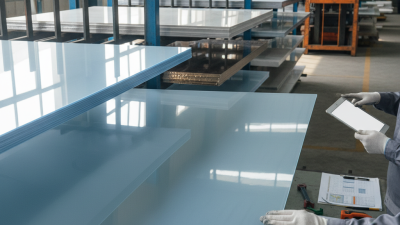
In practical material evaluations, I look for even thickness, clean edges, consistent transparency, and reliable packaging. Scratches often begin during transport, not installation. A reputable supplier should provide technical data, tolerance information, test results, and suitable samples. Ask how the sheet performs under heat, cold, moisture, and repeated impact.

Clear polycarbonate is lighter than glass, yet it can expand noticeably with temperature changes. Incorrect drilling or tight fastening may cause stress cracks. This is an easy detail to overlook. I have also found that “clear” does not always mean distortion-free; surface quality and manufacturing control matter. Supplier comparisons should examine resin quality, UV treatment, customization options, and after-sales technical support. The lowest price may hide weaker consistency or insufficient protection.

How to Evaluate Global Polycarbonate Sheet Suppliers

Choosing top clear polycarbonate sheet suppliers worldwide requires more than comparing online prices. Evaluate their production experience, material knowledge, and quality controls. Ask how they manage thickness tolerance, light transmission, impact strength, and surface protection. A reliable supplier should provide recent technical data, batch records, and samples from normal production.

Inspect the sheet under direct light. Look for haze, uneven edges, bubbles, and color differences. Request test results for ultraviolet resistance, thermal performance, and dimensional stability. Confirm whether the data applies to the exact grade you will purchase.

A polished sample can hide production variation. This is an easy mistake to miss. Also check packaging details, moisture protection, export experience, and realistic lead times. Vague answers deserve caution.

Tips: Compare at least three suppliers using the same questions and specifications. Request a small trial order before committing to volume. Measure the sample yourself when possible. Review the supplier’s response speed and technical clarity, not only the quotation. Certifications can support credibility, but they should be current and verifiable. If a supplier avoids discussing defects, replacement terms, or inspection procedures, keep searching. Reliable cooperation is built through transparent evidence, not attractive promises.

Leading Regions for Clear Polycarbonate Sheet Manufacturing

Clear polycarbonate sheet manufacturing is concentrated in regions with strong chemical, extrusion, and engineering capabilities. East Asia remains a major production center, especially China, Taiwan, South Korea, and Japan. These markets offer broad capacity, competitive tooling, and efficient supply networks. Large factories can produce roofing sheets, machine guards, glazing panels, and custom-cut formats.

Germany, Italy, and other Central European countries are recognized for precision processing and strict quality control. Their manufacturers often focus on optical clarity, dimensional stability, fire performance, and long service life. European plants commonly support construction, transportation, and industrial applications. However, higher energy and labor costs can affect final pricing.

North America also has an established manufacturing base, particularly in the United States and Canada. Regional suppliers often emphasize technical support, short delivery routes, and compliance documentation. Buyers should review resin grade, ultraviolet protection, thickness tolerance, and impact test results. A polished datasheet is not enough. Production samples and batch records provide stronger evidence.

Regional labels can mislead. A sheet may be extruded in one country and finished in another. This matters. Procurement teams should inspect factory equipment, testing routines, packaging methods, and traceability systems before placing large orders. Even experienced buyers sometimes overlook color consistency between batches. That weakness deserves attention.

Key Supplier Capabilities, Certifications, and Product Standards

Top clear polycarbonate sheet suppliers distinguish themselves through measurable capabilities, not attractive catalogs. Grand View Research estimated the global polycarbonate market at more than USD 15 billion in 2023, with continued growth expected through 2030. This expansion increases the need for consistent sheet quality. Reliable suppliers should control extrusion temperature, thickness tolerance, surface flatness, and optical clarity. Buyers should request batch-level data for light transmission, haze, impact strength, and yellowing resistance.

Certification matters, but the certificate alone is not enough. ISO 9001 supports documented quality management, while ISO 14001 indicates structured environmental controls. For building applications, EN 13501-1 or ASTM E84 may help verify fire-performance claims. ASTM D3935 identifies polycarbonate material requirements, while ASTM D638 and ASTM D256 support tensile and impact testing. Outdoor sheets should also include weathering results based on standards such as ISO 4892 or ASTM G154.

Look for traceable test reports. They should show test methods, specimen thickness, conditioning, and laboratory details. Some suppliers publish impressive impact values but omit the tested thickness. That weakens comparison. Ask for production samples, then inspect edges, protective film adhesion, and visible distortion under side lighting. A capable supplier can explain certification limits clearly. That honesty is sometimes more valuable than another marketing claim.

Top Clear Polycarbonate Sheet Suppliers Worldwide? - Key Supplier Capabilities, Certifications, and Product Standards
Supplier Capability Category Typical Clear Sheet Offering Common Technical Range Key Performance Criteria Relevant Standards or Certifications Recommended Buyer Verification
Solid Sheet Specialists Flat, transparent polycarbonate sheets for glazing, machine guards, partitions, displays, and protective barriers. Approx. 0.75–20 mm thickness; standard and cut-to-size formats; clear, embossed, textured, and tinted options. High impact resistance, optical clarity, dimensional stability, and good cold-forming capability. ISO 7391 for polycarbonate molding and extrusion materials; ISO 9001 quality-management certification is commonly requested. Request thickness tolerance data, optical-transmission results, impact-test reports, and resin-grade documentation.
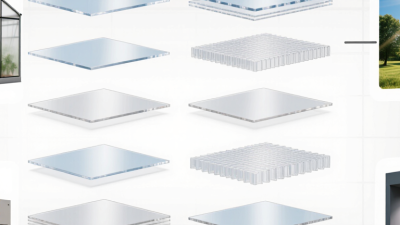
Multiwall Sheet Manufacturers Twin-wall, triple-wall, four-wall, and multi-chamber clear sheets for roofing, façades, skylights, and greenhouse structures. Typical thickness of 4–25 mm; common sheet widths around 2.1 m; custom lengths are widely available. Low weight, thermal insulation, light diffusion, rigidity, condensation control, and weather resistance. EN 16153 for light-transmitting multiwall polycarbonate sheets used in roofs and walls; ISO 9001 may support production consistency. Confirm U-value, light-transmission percentage, chamber geometry, UV-side marking, and long-term weathering evidence.
Flat Roofing and Façade Suppliers Flat solid or structured sheets engineered for external roof, wall, canopy, and daylighting applications. Usually supplied with UV-protected surfaces, installation profiles, sealing accessories, and project-specific cutting. Resistance to hail, wind load, temperature variation, ultraviolet exposure, and moisture ingress. EN 16240 for light-transmitting flat solid polycarbonate sheets used in roofs and walls; project requirements may also reference local building codes. Check declared load tables, support spacing, thermal-expansion allowances, installation instructions, and UV warranty terms.
Greenhouse and Agricultural Sheet Suppliers Clear or light-diffusing multiwall sheets designed for greenhouse roofs, horticultural structures, and controlled-environment agriculture. Common thicknesses of 6–16 mm; clear, opal, and light-diffusing surfaces; cut lengths for modular greenhouse systems. Light transmission, diffusion, thermal insulation, condensation management, and resistance to repeated temperature cycling. EN 16153 is relevant for multiwall roof and wall sheets; product-specific agricultural performance data should be supplied separately. Compare hemispherical light transmission, haze, thermal values, anti-drip treatment, and stated service-life conditions.
Machine Guard and Industrial Sheet Suppliers Transparent solid sheets for safety guards, observation windows, equipment enclosures, and impact-resistant barriers. Common thicknesses of 3–12 mm; polished, hard-coated, anti-static, abrasion-resistant, or flame-retardant options may be available. Impact resistance, retention of visibility, surface durability, machinability, and compatibility with industrial cleaning agents. UL 94 may be used to report flammability classification; the applicable machinery-safety standard depends on the finished guard and application. Request impact results, flammability reports where required, chemical-resistance data, and edge-finishing recommendations.
UV-Protection Capability Sheets with a coextruded ultraviolet-resistant layer on one or both sides. Typical UV-layer thickness and formulation are proprietary; one-sided protection is common for standard roofing sheets. Reduced yellowing, improved outdoor weatherability, retention of light transmission, and surface protection. Accelerated weathering may be evaluated using methods such as ISO 4892-2 or ASTM G154, depending on the test program. Verify UV-side identification, accelerated-weathering duration, color-change limits, haze change, and written warranty coverage.
Custom Processing and Fabrication Cutting, drilling, CNC routing, bending, edge polishing, printing, forming, and pre-assembled glazing components. Custom dimensions, holes, slots, bends, protective films, and project packaging can be specified before production. Dimensional accuracy, clean edges, low residual stress, repeatability, and protection against handling damage. ISO 9001-based process control is commonly used; tolerances should be agreed in the purchase specification. Approve a production drawing, first article, dimensional inspection report, packaging standard, and sample approval process.
Regulatory and Sustainability Documentation Material declarations, safety data, recycled-content statements, and compliance files for regional procurement requirements. Documentation varies by resin, additives, coating, destination market, and intended use. Traceability, restricted-substance control, consistent formulation, and transparent environmental information. REACH and RoHS declarations may be requested where applicable; ISO 14001 can indicate an environmental-management system but is not a product approval. Obtain current declarations, batch traceability, recycled-content evidence, safety data sheets, and market-specific compliance documents.
Global Export and Supply-Service Capability Export packaging, container loading, palletization, technical support, replacement handling, and documentation for international projects. Availability depends on standard sizes, production capacity, minimum order quantity, lead time, and destination regulations. On-time delivery, moisture protection, surface-film integrity, low damage rate, and responsive after-sales support. Quality certification supports process control; shipping and construction documentation must still be checked for each project. Evaluate sample lead time, production lead time, Incoterms, packaging photographs, claims procedure, and spare-sheet policy.
Note: Standards and certifications should be verified against the exact sheet construction, thickness, coating, application, destination market, and current supplier documentation. A test method or management-system certification does not automatically constitute approval for every end use.

How to Select the Right Worldwide Supplier for Your Project

Selecting a worldwide clear polycarbonate sheet supplier requires more than comparing prices. PlasticsEurope reported 400.3 million tonnes of global plastics production in 2022. That scale hides major quality differences. Ask for thickness tolerances, optical data, UV protection details, and batch traceability. A supplier should explain where resin, additives, and sheets are produced. Vague answers deserve caution.

For clear sheets, request testing against ASTM D1003 for haze and light transmission. ISO 11963 also defines key requirements for polycarbonate sheets. Review recent test reports, not only certificates. Certification alone is not proof. Check whether reports match your requested thickness and surface finish. A small sample should survive cutting, drilling, and outdoor exposure trials. I would inspect edge clarity under strong light. Tiny stress marks can become cracks later.

Logistics deserve equal attention. Compare minimum order quantities, packaging design, port access, lead times, and agreed Incoterms. The OECD’s Global Plastics Outlook estimated 353 million tonnes of plastic waste in 2019. Ask suppliers about recycled content, scrap handling, and supporting documentation. Environmental claims need evidence. A low quote can look persuasive, but replacement costs may outweigh savings. I would score each supplier against quality, delivery, technical support, and risk. No checklist is perfect. Project-specific testing still matters.