Top 10 Polycarbonate Multiwall Manufacturers Worldwide?
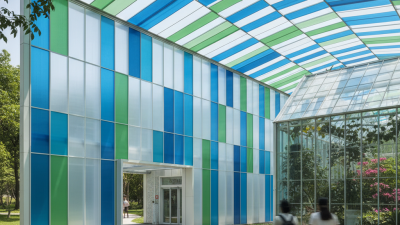
Choosing a polycarbonate multiwall manufacturer requires more than comparing glossy brochures or production volume. This guide introduces ten influential manufacturers serving construction, agriculture, and industrial markets worldwide. Their products often appear in skylights, greenhouse roofs, facade systems, and sheltered walkways. We examine practical evidence, including sheet structure, thermal performance, light transmission, impact resistance, UV protection, and available thicknesses. Small details matter. A poorly matched profile can create condensation, edge leakage, or premature discoloration.
The selection also considers manufacturing experience, technical support, geographic reach, and documented quality controls. Where available, we review published test data, installation guidance, certifications, warranty terms, and project references. These sources help separate measurable capability from confident marketing language. However, manufacturer information is not always comparable. Testing standards, product names, and warranty conditions can vary by region. Buyers should confirm current specifications directly before placing an order.
This overview is intended for architects, distributors, contractors, and project owners. It offers a practical starting point, not a permanent verdict. Market leadership can shift with acquisitions, new factories, material costs, and regional demand. Some manufacturers may excel in greenhouse panels, while others perform better in architectural systems. That distinction deserves attention. We may also miss smaller specialists with excellent local service. Still, comparing these ten companies through consistent criteria can clarify purchasing decisions. The strongest supplier is rarely the biggest one. It is the partner providing reliable panels, transparent documentation, responsive advice, and support after delivery.
Definition and Key Features of Polycarbonate Multiwall Panels
Polycarbonate multiwall panels
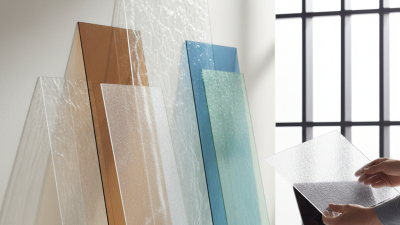
Polycarbonate multiwall panels are lightweight building sheets with several internal layers. Thin ribs connect the layers and form hollow chambers. These chambers reduce heat transfer while keeping the panel easy to handle. Common structures include twinwall, triplewall, and honeycomb designs. Panel thickness often ranges from 4 to 25 millimeters, depending on the project. Compared with glass, polycarbonate offers lower weight and stronger impact resistance.
twinwall
Panel thickness often ranges from 4 to 25 millimeters, depending on the project.
triplewall
These chambers reduce heat transfer while keeping the panel easy to handle.
honeycomb designs
Compared with glass, polycarbonate offers lower weight and stronger impact resistance.
Its key features include daylight transmission, thermal insulation, and weather resistance.
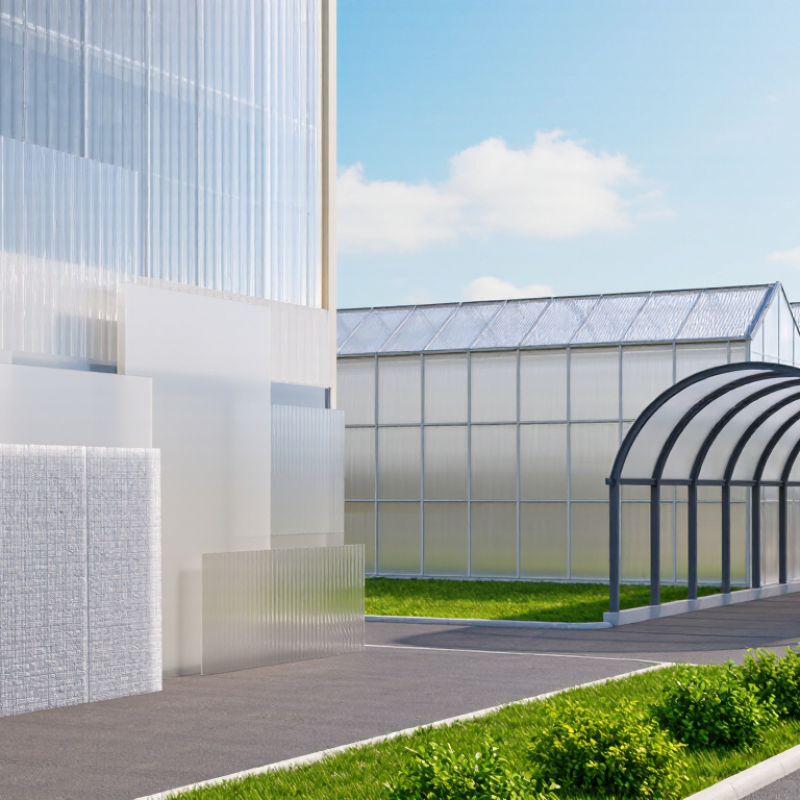
A clear panel can spread sunlight across a greenhouse or covered walkway. That softer light may reduce harsh shadows. Many panels include a UV-protective surface, which helps limit yellowing and surface damage. However, performance depends on coating quality, thickness, color, and installation direction. Not every transparent panel provides the same insulation.
Field installation also reveals practical details.
The ribs usually need to face vertically, allowing internal moisture to drain. Open ends require suitable profiles or breathable sealing tape. Otherwise, dust and condensation may collect inside the chambers. A panel can look clean outside but still lose clarity internally.
No panel is perfect.
Some lightweight designs flex under strong wind, and their acoustic performance remains modest. When comparing global manufacturers, buyers should review test reports, warranty terms, dimensional tolerance, and long-term project references. Product samples are useful, but a small sample cannot fully predict years of outdoor exposure.
How Polycarbonate Multiwall Manufacturers Are Evaluated
A credible Top 10 ranking should measure more than factory size.
Polycarbonate multiwall manufacturers are evaluated through product performance, manufacturing consistency, and documented service. According to Mordor Intelligence, the global polycarbonate sheets market is projected to grow steadily through 2029, increasing pressure on suppliers to prove reliability. The exact market value varies between research firms. That is worth noting.
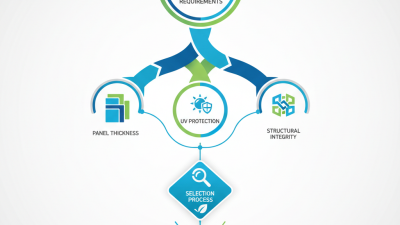
Technical evaluation begins with thermal insulation, light transmission, impact resistance, and UV protection.
Buyers should request tested U-values, not broad marketing claims. EN 16153 and relevant ASTM methods can help verify roofing and wall-panel performance. Thickness tolerance also matters. A small variation can affect installation and heat retention. Strong manufacturers usually provide batch records, test reports, and clear warranty conditions. ISO 9001 certification supports process control, but it does not guarantee excellent panels. Experience still matters.
Tips:
Compare identical panel structures, such as four-wall against four-wall designs. Check UV-layer thickness and ask whether it is co-extruded. Review independent laboratory results. Inspect samples under daylight. Look for cloudy edges, uneven ribs, or brittle cut surfaces. Also assess delivery capacity, technical guidance, recycling information, and replacement support. Price alone can mislead. A low quotation may hide weaker coatings or inconsistent dimensions. My own evaluation would leave room for uncertainty, because published data rarely shows long-term performance across every climate.
Top 10 Polycarbonate Multiwall Manufacturers Worldwide
Top 10 Polycarbonate Multiwall Manufacturers Worldwide
The top ten polycarbonate multiwall manufacturers worldwide are best compared through performance, not advertising claims. Experienced buyers examine sheet thickness, wall structure, light transmission, thermal insulation, and warranty terms. They also check whether production follows recognized ISO or ASTM testing practices. Reliable manufacturers publish technical data, installation guides, and measured impact results. Clear documentation matters when panels cover a greenhouse, warehouse, or public walkway.
Manufacturing strength appears in small details. Consistent rib spacing reduces weak points during cutting and fastening. UV protection should remain stable under strong sunlight, not only in laboratory samples. Some producers offer fire-rated, tinted, embossed, or anti-condensation options. Others focus on lightweight panels for agricultural buildings. The strongest global suppliers usually maintain regional stock and technical support. This reduces delays when a project needs replacement sheets or revised specifications.
However, a universal ranking can be misleading. Climate, building design, and installer skill change the final result. A panel that performs well in a cool region may need different protection in humid heat. Public information is also uneven, so I would not treat every “top ten” list as definitive. Buyers should request recent test reports, compare actual warranty conditions, and inspect sample surfaces before ordering. That extra step is practical. It may prevent an expensive mistake.
Product Lines, Technologies, and Market Applications
Top 10 Polycarbonate Multiwall Manufacturers Worldwide: Product Lines, Technologies, and Market Applications
A credible top-ten list should examine more than production volume. It should assess sheet quality, technical support, certifications, and regional availability. Leading manufacturers typically offer twin-wall, triple-wall, and multi-layer polycarbonate panels. Some also produce structured sheets with honeycomb cores or advanced X-shaped ribs. These designs improve insulation while reducing material use. Not every factory performs equally well across all climates. That matters.
Manufacturing technology often includes co-extrusion, ultraviolet protective layers, infrared control, and customized surface treatments. These features support applications in commercial skylights, greenhouse roofs, warehouse facades, sports facilities, and residential extensions. Experienced suppliers provide cutting guidance, connector systems, thermal expansion data, and installation manuals. Reliable testing should cover light transmission, impact resistance, fire behavior, and long-term weathering. Yet, published figures may use different testing conditions. Comparisons can become misleading.
Tips: Match the panel structure to the project’s span, climate, and insulation target. Check the usable width, not only the advertised width. Request samples before approving large orders. Examine edge finishing, protective film quality, and connector fit. Ask how ultraviolet protection is integrated. Surface coating alone may not provide equal durability. I would also inspect warranty terms carefully, because a long warranty cannot replace clear maintenance requirements. Small details matter. And sometimes, the cheapest panel becomes expensive after installation errors.
Regional Presence, Certifications, and Purchasing Considerations
A credible top-ten list of polycarbonate multiwall manufacturers should examine regional reach, not only production volume. A 2024 Mordor Intelligence assessment values the global polycarbonate market above USD 17 billion, with construction remaining a major application. Manufacturing clusters in East Asia, Europe, and North America can shorten delivery times. However, a nearby warehouse does not always mean stable supply.
Certifications deserve practical checking. ISO 9001 supports documented quality control, while ISO 14001 indicates structured environmental management. For daylighting panels, buyers should request EN 16153 or relevant ASTM test evidence. Fire classification must match the project’s local building code. Ask for UV-layer thickness, thermal transmittance, light transmission, impact strength, and tested service temperature. Paperwork matters.
Purchasing decisions should include more than price per square meter. Compare sheet weight, rib geometry, warranty terms, replacement access, and minimum order quantities. Request batch-level test reports. That small step can expose inconsistent thickness. Regional distributors may offer faster support, but direct imports can reduce unit cost and increase customs risk. The comparison is imperfect; published certifications may cover one factory, not every production line. Buyers should verify the actual manufacturing site, production date, and coating direction before signing a large contract.
Top 10 Polycarbonate Multiwall Manufacturers Worldwide: Purchasing Considerations
The chart presents a practical purchasing scorecard for comparing global multiwall polycarbonate suppliers.
Regional manufacturing presence and logistics are assessed together with product performance, certifications,
traceability, and total landed cost.
The percentages represent a decision-model weighting rather than company rankings or market share.
Buyers should verify applicable documentation, including ISO 9001 quality systems, ISO 14001 environmental systems,
EN 16153 or ASTM-based performance evidence where relevant, CE or UKCA requirements for the destination market,
fire-performance classifications such as EN 13501-1 or UL 94 where specified, warranty terms, minimum order quantities,
lead times, and delivered cost.