7 Best Clear Plastic Sheets for Wholesale Buyers
Wholesale buyers rarely need the cheapest sheet alone. They need reliable clarity, consistent thickness, and predictable delivery.
The global plastics industry remains substantial. PlasticsEurope reported approximately 400.3 million tonnes of plastic production worldwide in 2022. The OECD’s Global Plastics Outlook also highlights growing pressure to improve resource efficiency and manage plastic waste. These findings matter when selecting clear plastic sheets for packaging, fabrication, displays, glazing, and industrial protection. A purchasing decision now involves more than appearance. It includes service life, material traceability, handling, and end-of-life considerations.
This guide evaluates seven leading clear plastic sheets for wholesale purchasing. The comparison considers acrylic, polycarbonate, PETG, PVC, polypropylene, and related sheet options. Each material behaves differently under impact, heat, moisture, machining, and outdoor exposure. For example, ASTM D1003 measures haze and luminous transmittance, while ASTM D882 evaluates tensile properties. These tests provide useful evidence, but laboratory results do not perfectly predict every jobsite condition. The details matter.
Buyers should also review thickness tolerance, protective-film quality, minimum order quantities, packaging strength, and supplier documentation. A 3-millimeter sheet may look suitable in a sample, yet warp during transport or fail under repeated impact. That risk is easy to underestimate. Supplier experience can reduce surprises, especially when orders involve custom cutting or container-scale quantities. No shortlist is perfect. Climate, tooling, budget, and application requirements can change the best choice. Use this overview as a practical starting point, then confirm samples, technical data sheets, and independent test results before committing to a wholesale order.
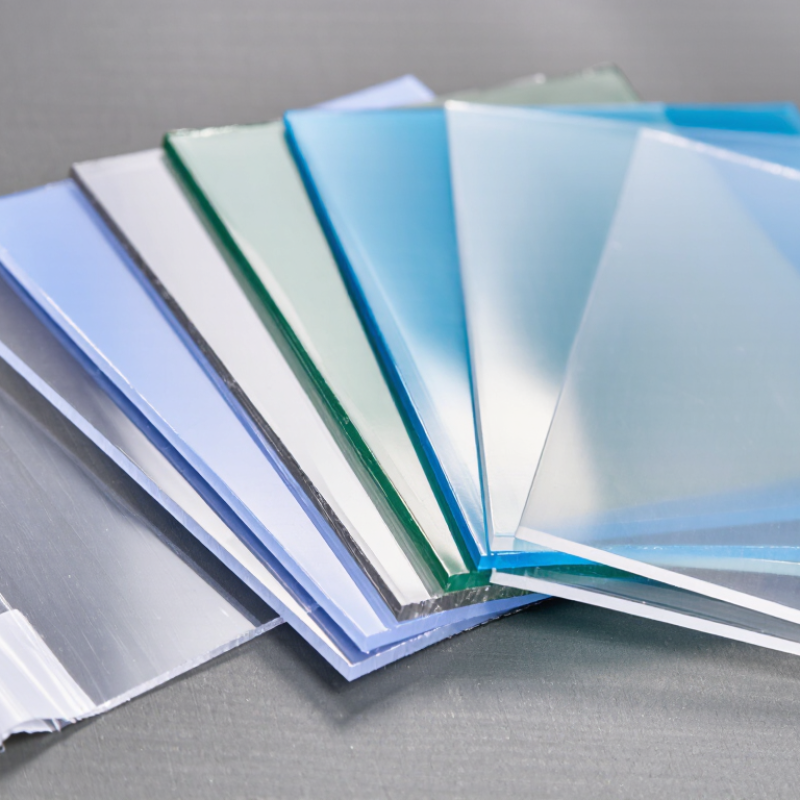
Wholesale Requirements for Clear Plastic Sheets
Wholesale buyers need clear plastic sheets that match real production demands, not only attractive sample photos.
The seven strongest options may include acrylic, polycarbonate, PET, PVC, PETG, polypropylene, and polystyrene sheets. Each material serves different needs.
Before placing a bulk order, confirm:
- thickness tolerance
- sheet dimensions
- clarity
- surface protection
- cutting accuracy
A difference of 0.2 millimeters can affect assembly. Ask for technical data, test reports, and production samples. Check whether the supplier can maintain colorless transparency across repeated batches.
Packaging also matters. Protective film, corner guards, and moisture-resistant cartons can reduce scratches during transport. Confirm minimum order quantity, lead time, replacement terms, and inspection procedures in writing.
Tips:
Compare total landed cost, not just the unit price. Include cutting, packing, freight, and possible waste.
Request a small trial order first. It may reveal warping or film adhesion problems.
I have seen buyers choose the cheapest sheet and spend more correcting defects later. That mistake is easy to make.
Review your application carefully, because “clear” does not always mean optically perfect.
A dependable supplier should answer technical questions clearly and admit material limitations.
The Seven Best Clear Plastic Sheet Materials Compared
7 Best Clear Plastic Sheets for Wholesale Buyers
The Seven Best Clear Plastic Sheet Materials Compared
Clear sheet selection starts with the application, not the lowest unit price. Acrylic usually delivers about 92% light transmission, according to common ASTM D1003 testing data. It offers a glass-like surface, but it can crack under sharp impact. Polycarbonate transmits roughly 88% to 90% of visible light and provides far higher impact resistance. PETG bends cleanly during forming and suits displays with curved edges. PVC resists moisture and many chemicals, although outdoor aging can become a concern. My early mistake was treating clarity as the only quality measure.
The remaining three materials serve different wholesale needs. PET sheets provide stable clarity and are often chosen for packaging, folding, and printed panels. Polypropylene is lightweight, moisture-resistant, and useful where hinges or repeated flexing matter. General-purpose polystyrene remains economical and bright, but it is more brittle during transport.
PlasticsEurope reported global plastics production at about 414 million tonnes in 2023, showing the scale of material demand. However, large volume does not guarantee consistent sheet quality. Ask suppliers for thickness tolerance, haze, impact data, and UV-aging results. Smithers’ market research also identifies packaging and construction as major sheet-growth applications, but regional demand varies. I would test a 300-millimeter sample first. Cheap clarity can look disappointing under warehouse lighting.
How to Assess Thickness, Clarity, Strength, and Flexibility
For wholesale buyers, the seven best clear plastic sheets are not judged by appearance alone. Thickness affects stiffness, weight, cutting, and shipping cost. Measure several points with a calibrated gauge. A sheet advertised as 3 mm may vary slightly across its surface. That difference matters in large panels. Clarity should be checked under white light. Look for haze, bubbles, scratches, and yellow tones. A printed black grid behind the sheet reveals distortion quickly.
Tips: Request production samples. Test them before ordering pallets. Bend a narrow strip by hand, but do not rely on hand pressure alone. Check the technical data sheet, batch consistency, and edge quality. A clear sheet can look excellent and still crack during drilling.
Strength depends on the intended load and impact risk. Polycarbonate usually handles impact well, while acrylic often offers strong surface clarity and rigidity. PETG can provide useful forming flexibility. Other options may suit packaging or temporary displays. Compare tensile data, impact ratings, and temperature limits under the same testing standards. Flexibility is not automatically a benefit. Excessive bending may cause whitening, stress marks, or permanent warping. I once approved a visually perfect sample that failed after repeated folding. That mistake showed why real-use testing matters. Test samples at expected temperatures and with actual fasteners. Check whether protective film peels cleanly. Small details often decide whether a wholesale shipment performs reliably.
Matching Each Sheet Type to Its Best Commercial Application
7 Best Clear Plastic Sheets for Wholesale Buyers
Clear plastic sheets are not interchangeable. Each performs differently under heat, impact, moisture, and repeated handling. Acrylic offers bright clarity for retail signs, menu holders, and display cases. Polycarbonate suits machine guards, protective screens, and busy public areas because it resists strong impacts. It looks simple. It is not.
PETG works well for formed product displays and lightweight enclosures, especially where clean bends matter. APET is practical for trays, folding cartons, and transparent packaging, but buyers should confirm food-contact requirements. Clear PVC supports indoor signage, partitions, and applications needing chemical resistance. Polystyrene remains useful for low-cost point-of-sale panels and short-term displays. However, it scratches easily. That limitation is often missed during price comparisons.
Polypropylene sheets fit reusable dividers, storage components, and moisture-prone interiors. Their flexibility can help during installation, though it may reduce stiffness across wide spans. Wholesale buyers should compare thickness, surface hardness, UV stability, fire performance, and cutting tolerances. Request current technical data and sample pieces before committing to pallet quantities. Check the edges. Small cracks around drilled holes may reveal poor processing or unsuitable installation methods. A lower unit price can become expensive after warping, replacement, or damaged packaging. I would also review the intended cleaning chemicals, because a sheet that survives impact may still haze or crack during routine maintenance.
7 Best Clear Plastic Sheets for Wholesale Buyers - Matching Each Sheet Type to Its Best Commercial Application
| Sheet Type | Typical Clear Thicknesses | Key Commercial Advantages | Relative Impact Resistance | Typical Continuous-Use Temperature Range | Best Commercial Applications | Wholesale Buying Considerations |
|---|---|---|---|---|---|---|
| Clear Acrylic (PMMA) | 1–25 mm | Excellent optical clarity, strong weatherability, lightweight, easy to machine and polish | Moderate | Approximately −30°C to 80°C | Retail displays, illuminated signs, point-of-sale fixtures, picture glazing, protective covers | Choose cast sheet for machining and laser work; select UV-stabilized grades for outdoor use. |
| Polycarbonate (PC) | 0.5–25 mm | Very high impact strength, good light transmission, cold-forming capability, low-temperature toughness | Very high | Approximately −40°C to 100°C | Machine guards, safety glazing, security screens, greenhouse panels, industrial partitions | Specify UV-coated grades for exterior installations and hard-coated grades where scratch resistance matters. |
| PETG | 0.5–12 mm | High clarity, easy thermoforming, good impact performance, strong resistance to many chemicals | High | Approximately −40°C to 65°C | Retail packaging, formed trays, medical-device packaging, product guards, display housings | A practical choice for deep-drawn or formed parts; confirm food-contact or medical compliance when required. |
| Clear PVC | 0.2–10 mm | Cost-effective, chemically resistant, available in rigid and flexible grades, easy to print and fabricate | Moderate | Approximately −15°C to 60°C | Machine curtains, document pockets, packaging windows, laboratory guards, protective covers | Confirm whether the project requires rigid or flexible PVC and check plasticizer, fire, and regulatory requirements. |
| Polypropylene (PP) | 0.5–12 mm | Low density, excellent moisture and chemical resistance, living-hinge capability, weldable | Moderate to high | Approximately 0°C to 100°C | Reusable bins, tank liners, laboratory components, food-processing guards, washable partitions | Clarity is generally lower than acrylic or PETG; select clarified grades when visual transparency is important. |
| Clear Polystyrene (PS) | 0.5–6 mm | Low material cost, good initial clarity, easy die-cutting and thermoforming | Low to moderate | Approximately −20°C to 70°C | Disposable packaging, lightweight product trays, indoor signage, sample containers, retail inserts | Best for low-cost indoor applications; avoid high-impact, outdoor, or elevated-temperature service. |
| Clear Polyethylene (PE) | 0.5–10 mm | Excellent moisture resistance, good chemical resistance, flexible options, good low-temperature performance | High | Approximately −50°C to 80°C | Industrial curtains, protective liners, spill barriers, agricultural covers, moisture-resistant packaging | Transparency varies from translucent to clear; verify grade, density, flexibility, and welding compatibility before ordering. |
Note: Thicknesses, temperature limits, clarity, and performance vary by grade, manufacturing method, additives, and service conditions. Always confirm the supplier’s technical data sheet for the intended application.
How to Compare Suppliers, Pricing, Quality, and Bulk Packaging
Wholesale buyers should compare clear plastic sheets by application, not appearance alone. Acrylic offers strong clarity and a polished surface. Polycarbonate handles impact better. PETG bends more easily and suits formed displays. PVC, polypropylene, polyethylene, and acetate can serve different packaging or fabrication needs. Ask each supplier for thickness tolerance, light transmission, surface protection, and available cut sizes.
Request quotes at the same quantity and specification. A low unit price may exclude tooling, trimming, pallets, or export packaging. Check whether prices change at 100, 500, or 1,000 sheets. Confirm payment terms, production time, replacement procedures, and sample costs. Reliable suppliers provide recent test data and clear answers. Vague promises are expensive.
Inspect samples under bright light. Look for haze, scratches, uneven edges, and trapped particles. Measure thickness at several points. Bulk packaging also matters. Sheets should have protective film, corner guards, moisture-resistant wrapping, and stable cartons or pallets. Ask for package dimensions and gross weight before shipping. I once treated packaging as a minor detail, and several corners arrived damaged. That mistake changed our checklist. No comparison is perfect. Supplier communication can still reveal more than a polished sample.
7 Clear Plastic Sheets: Wholesale Comparison Guide
This comparison uses typical industry ranges for uncoated clear sheets. Visible-light transmission is shown as a percentage, impact resistance is indexed against acrylic, and the wholesale price index uses acrylic as the reference value of 100. Actual pricing depends on thickness, order volume, tolerances, packaging, and delivery terms.
For bulk purchasing, polycarbonate provides the highest impact resistance, acrylic offers the clearest appearance, and polystyrene or PVC may provide lower-cost options. Confirm supplier specifications, minimum order quantities, sheet protection, pallet configuration, and moisture-resistant packaging before placing an order.
Related Posts
-
How to Choose Clear Sheets for Global Sourcing?
-
How to Choose the Best Lucite Sheets for Your Project?
-

Top 10 Benefits of Using Transparent Sheets for Your DIY Projects
-
What Is the Best Transparent Sheet for Buyers in 2026?
-

What Are Lucite Sheets Used For?
-

Why Choose Polycarbonate Sheets for Your Next Project and Their Benefits