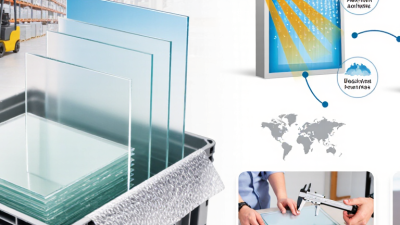
How to Choose Clear Sheets for Global Sourcing?
Choosing clear sheets for global sourcing requires more than comparing price per square metre. Buyers must match resin type, thickness, optical clarity, impact strength, and manufacturing tolerance to the final application. A display panel, greenhouse cover, machine guard, and food-contact component need different specifications. They may look identical in a sample box. They are not.
Grand View Research estimates that the global acrylic sheets market reached about USD 4.6 billion in 2023, with continued growth expected through the decade. The report also highlights construction, automotive, and signage as important demand sectors. Meanwhile, PlasticsEurope’s Plastics—The Fast Facts 2024 report shows that Asia remains the world’s largest plastics-producing region. That matters for supplier selection, freight planning, and quality control. Market figures vary by definition. That is worth remembering.
Materials engineer Dr. John G. Williams offers a useful principle: “Material selection should begin with the application, not the catalogue.” For clear sheets, that means testing real samples under heat, moisture, ultraviolet exposure, and handling stress. Ask for resin identification, test standards, tolerance data, and batch traceability. A low quotation can become expensive after warping, yellowing, or rejected shipments. Supplier audits, independent inspection, and documented corrective actions strengthen trust. Even then, no sourcing model is perfect. A polished datasheet cannot replace a physical trial. Examine the edge finish, measure thickness at several points, and check clarity under warehouse lighting. Small details often reveal large risks.

What Are Clear Sheets and Which Types Are Available?
Clear sheets are flat, transparent materials used for protection, fabrication, display, glazing, and packaging. Their appearance may look similar, but their performance can differ greatly. Common options include acrylic, polycarbonate, PETG, PVC, and glass. Acrylic offers strong clarity and a polished appearance. Polycarbonate provides higher impact resistance. PETG bends more easily and suits formed parts. PVC can be practical for selected industrial uses.
The right choice depends on the working environment, not only the lowest quotation. Check thickness, sheet size, transparency, haze, color, surface hardness, and UV resistance. Ask for samples with measured specifications. Hold one against a bright window. Small waves or cloudy edges may appear immediately. I once approved a clear sample that looked excellent indoors. Under outdoor light, its surface showed uneven gloss. That mistake changed my inspection routine.
Global sourcing also requires careful questions about packing and transport. Protective film, corner guards, and moisture-resistant wrapping can reduce scratches and warping. Confirm whether the supplier can maintain consistent thickness across production batches. Request test reports that match the actual material grade, not a generic document. Standards and labeling requirements may differ by destination, so verify them with qualified local professionals. A clear sheet is not automatically suitable for food contact, outdoor use, or safety applications. I still leave room for uncertainty. Real conditions can expose weaknesses that a sample cannot.
How to Define Performance, Size, and Compliance Requirements
When choosing clear sheets for global sourcing, define performance before requesting prices. Acrylic offers high optical clarity, while polycarbonate provides stronger impact resistance. PETG is easier to thermoform but may scratch more easily. Ask suppliers for tested values, not adjectives such as “premium” or “crystal clear.” Require light transmission, haze, impact strength, tensile strength, and service temperature data. ISO 527 supports tensile testing, while ISO 179 or ISO 180 can guide impact testing. Test samples at the expected thickness.
Size specifications need equal precision. State length, width, thickness, tolerance, flatness, edge condition, and protective-film requirements. A 3 mm sheet with a ±0.15 mm tolerance may not fit a precision frame. Confirm whether dimensions refer to the sheet body or the usable area. Request a dimensional inspection report for every production lot. Small details matter.
Compliance depends on the application and destination. For food-contact use, request documentation matching the importing market, including migration testing and material traceability. For construction applications, ask for fire-performance evidence under the relevant regional standard. PlasticsEurope reported global plastics production at 413.8 million tonnes in 2023, showing the scale of the supply chain, but volume does not guarantee consistency. The OECD’s Global Plastics Outlook also highlights growing waste pressures, so recycled content and end-of-life claims should be verified carefully. I have found that suppliers sometimes provide outdated certificates. Recheck them. A clear sheet can look perfect, yet fail after ultraviolet exposure, bending, or transport.
How to Choose Clear Sheets for Global Sourcing? - How to Define Performance, Size, and Compliance Requirements

| Material Type | Typical Transparency | Typical Thickness Range | Typical Sheet Size | Key Performance Characteristics | Temperature Guidance | Common Applications | Recommended Compliance Requirements | Important Sourcing Checks |
|---|---|---|---|---|---|---|---|---|
| Acrylic (PMMA) | Approximately 92% light transmission for clear cast sheet; optical clarity is generally higher than standard glass of similar thickness. | 1–25 mm for common industrial and display applications. | Typical stock sizes include 1,220 × 2,440 mm and 2,050 × 3,050 mm; custom sizes may be available. | Excellent weather resistance, good surface hardness, low density of approximately 1.18 g/cm³, and good rigidity. More brittle and less impact-resistant than polycarbonate. | Typical continuous-use guidance is approximately -30°C to 80°C, depending on grade and load conditions. | Signage, retail displays, lighting covers, machine guards, partitions, and architectural glazing where high clarity is required. | Request applicable product safety declarations, REACH and RoHS status where relevant, and UV-weathering data for outdoor use. For building use, verify local fire and glazing requirements. | Specify cast or extruded production, protective-film type, thickness tolerance, haze, color consistency, edge quality, and resistance to crazing after cleaning. |
| Polycarbonate (PC) | Approximately 86–90% light transmission for clear sheet, depending on thickness and surface treatment. | 0.8–20 mm for general-purpose solid sheet; thicker grades are available for specialized uses. | Common formats include 1,220 × 2,440 mm, 2,100 × 5,800 mm, and other project-specific dimensions. | Very high impact resistance, good dimensional stability, lower scratch resistance than acrylic unless hard-coated, and density of approximately 1.20 g/cm³. | Typical continuous-use guidance is approximately -40°C to 100–115°C, depending on grade, stress, and exposure. | Safety glazing, machine guards, protective screens, industrial windows, transport components, and security panels. | Request impact-test results, UV-stabilization information, REACH and RoHS status where relevant, and fire classification to the destination-market standard. | Confirm UV protection is co-extruded or coated on the correct side, define scratch-resistance expectations, and check stress-cracking resistance with the intended cleaning chemicals. |
| PETG | Approximately 88–90% light transmission for clear sheet, with good visual clarity and thermoforming suitability. | 0.5–12 mm for common packaging, display, and fabricated parts. | Typical stock sizes include 1,220 × 2,440 mm and 1,250 × 2,500 mm; roll or custom formats may also be available. | Good impact resistance, easy thermoforming, good chemical resistance for many household chemicals, and density of approximately 1.27 g/cm³. | Typical continuous-use guidance is approximately -40°C to 65–70°C; forming and end-use limits must be confirmed for the grade. | Point-of-sale displays, protective covers, formed trays, interior components, and transparent guards. | For food-contact use, request a declaration against the destination-market food-contact framework. Also verify REACH, RoHS, and applicable fire requirements. | Define forming temperature, shrinkage allowance, drying requirements, surface protection, thickness after forming, and resistance to alcohol-based cleaners. |
| Clear PVC | Approximately 80–88% light transmission, depending on formulation, thickness, and plasticizer content. | 0.2–10 mm for flexible films, curtains, covers, and rigid sheet applications. | Rigid sheets are commonly supplied in 1,220 × 2,440 mm formats; flexible products may be supplied in rolls. | Good chemical resistance, flame-retardant formulations are available, and density is generally approximately 1.30–1.45 g/cm³. Plasticized grades are flexible but may migrate or become brittle over time. | Typical service guidance is approximately -15°C to 60°C, with the actual range depending strongly on the formulation. | Strip curtains, protective covers, tanks, fabricated enclosures, industrial barriers, and transparent packaging components. | Request plasticizer information, REACH and RoHS status, migration data where applicable, and fire test documentation for the destination market. | Identify whether the sheet is rigid or flexible, confirm plasticizer type, check odor and fogging requirements, and evaluate long-term yellowing and cold-temperature flexibility. |
| Tempered Float Glass | Approximately 89–91% light transmission for clear glass, depending on thickness and iron content. | 3–19 mm for many architectural and industrial applications. | Typical maximum sizes depend on the processor; common project formats include 1,220 × 2,440 mm and larger custom panels. | High scratch resistance, excellent surface hardness, non-combustibility, and strong resistance to many chemicals. Tempering increases bending and impact strength, but the sheet remains brittle and can shatter into small fragments. | Typical service use is approximately -40°C to 250°C; thermal-shock performance must be verified for the application. | Doors, partitions, display cases, architectural glazing, equipment windows, and high-temperature viewing panels. | Specify the required safety-glazing standard, heat-soak testing where relevant, edge-processing requirements, and local building-code compliance. | Define flatness, optical distortion, edgework, hole and cut-out tolerances, fragmentation behavior, packing method, and breakage claims during international transport. |
| PET Sheet | Approximately 85–90% light transmission for clear grades, depending on formulation and thickness. | 0.2–3 mm for many packaging, printing, and protective-cover applications. | Frequently supplied in rolls or sheets such as 1,000 × 2,000 mm and 1,220 × 2,440 mm. | Good dimensional stability, good printability, moderate impact resistance, and density of approximately 1.33–1.40 g/cm³. Heat resistance varies by grade and orientation. | Typical continuous-use guidance is approximately -40°C to 70–85°C, depending on grade and mechanical load. | Packaging, printed overlays, protective films, document covers, labels, and lightweight transparent components. | For packaging or food contact, request the applicable declaration of compliance and migration testing. Verify REACH, RoHS, and recycled-content claims if required. | Confirm sheet orientation, roll direction, corona or surface treatment, gauge tolerance, print adhesion, curl, winding quality, and recycled-content percentage. |
| General Requirement for Any Clear Sheet | Define minimum light transmission and maximum haze using an agreed test method; visual approval alone is not sufficient for repeat sourcing. | Specify nominal thickness, minimum thickness, thickness tolerance, and measurement locations. | State finished length, width, squareness, flatness, corner radius, quantity tolerance, and acceptable nesting or cutting layout. | Define required impact strength, flexural performance, hardness, UV resistance, chemical resistance, color, haze, surface finish, and expected service life. | State minimum and maximum operating temperatures, thermal cycling conditions, humidity exposure, and whether outdoor weathering is required. | Match the material to the actual use environment, fabrication process, cleaning method, installation method, and expected loading. | Specify destination-market requirements such as REACH, RoHS, food-contact rules, fire classification, safety glazing, packaging regulations, and restricted substances. | Require a technical data sheet, certificate of analysis, sample approval, inspection plan, packaging specification, lot traceability, and pre-shipment inspection criteria. |
How to Evaluate Clear Sheet Materials and Manufacturing Quality
When choosing clear sheets for global sourcing, evaluate the material before comparing prices. Acrylic offers strong clarity, while polycarbonate usually handles impact better. PETG can suit formed parts, but heat resistance may be limited. Ask for the resin type, thickness, density, light transmission, haze, and UV performance. These figures should match the intended application, not only a supplier’s standard catalogue. Request samples from the actual production line. A small sample can reveal bubbles, uneven edges, scratches, or inconsistent transparency.
Tips: Measure thickness at several points. Check both surfaces under angled light. Compare clarity after wiping. Ask for batch-based test reports and traceable production records. If possible, use an independent laboratory for critical properties. A polished report is not proof of stable quality.
Manufacturing quality depends on more than the sheet material. Review extrusion temperature control, cooling systems, cutting accuracy, protective film, and packaging. Inspect a larger sample, not just one attractive piece. Look for warping on a flat table and stress marks around drilled holes. I would also test samples after transport simulation, because vibration and heat can change the result. One common mistake is trusting a single shipment. Quality may drift between batches, even when the specification remains unchanged. Leave room for rechecking, because a perfect inspection plan still has blind spots.
How to Compare Global Suppliers, Prices, and Minimum Order Terms
How to Choose Clear Sheets for Global Sourcing?
How to Compare Global Suppliers, Prices, and Minimum Order Terms
Choosing clear sheets globally requires more than comparing the lowest quoted price. Ask each supplier for the same specification: material type, thickness, sheet size, clarity level, surface finish, and allowed tolerance. Request recent samples from at least three suppliers. Place them under identical lighting. Small differences in haze, edge quality, and protective film adhesion become obvious there.
A reliable supplier should provide batch records, inspection procedures, and test data for light transmission and thickness accuracy. Ask how defects are classified and how rejected sheets are handled. Factory experience matters, but documented quality controls matter more. I once accepted a cheaper quotation before checking its packaging method. Several sheets arrived with corner damage. That mistake made the final cost higher than expected.
Compare total landed cost, not only the unit price. Include tooling, sample fees, export packing, freight, insurance, and payment conditions. Check whether the quotation uses the same delivery term and currency. Minimum order quantities also need careful review. A low MOQ may carry a higher price, while a large MOQ can tie up cash and storage space. Ask whether mixed sizes or trial batches are possible. Suppliers may promise flexibility, but get every condition in writing. Price alone is rarely the best evidence.
How to Verify Samples, Shipping Plans, and Long-Term Supply Reliability
Choosing clear sheets for global sourcing requires more than checking appearance.
A clean sample may hide uneven thickness, surface haze, weak edges, or inconsistent light transmission. Request samples from the actual production line, not only warehouse stock. Measure thickness at several points with a calibrated gauge. Record haze, color, dimensions, and protective-film quality. ISO 2859-1 can support a practical inspection plan for larger batches.
Shipping reliability deserves equal attention.
UNCTAD reports that more than 80% of global merchandise trade by volume moves by sea. A delayed vessel can interrupt fabrication schedules for weeks. Ask suppliers for a packing diagram, container-loading photos, carton measurements, and a documented shipping timeline. Confirm the trade terms, port responsibilities, insurance, and contingency routes in writing. The World Bank’s 2023 Logistics Performance Index highlights timeliness and shipment reliability as key logistics measures. Use both when comparing sourcing locations.
Tips:
Approve a sealed reference sample and keep it for future inspections. Specify acceptable tolerance ranges before placing an order. Request production photos before dispatch. Check whether the supplier can reserve raw materials during peak seasons. Ask for monthly capacity data, backup equipment, and previous export records. Do not trust vague promises. A perfect sample can still represent an unusually good batch. That is the uncomfortable part. Review quality records and delivery performance after every shipment, then adjust your supplier scorecard.
Related Posts
-
Why Choose Clear Sheets for Global Sourcing?
-
What Are the Top China Clear Sheets for Global Buyers?
-

Top 10 Benefits of Using Clear Plastic Sheets for Your Projects?
-

2025 Top 10 Clear Plastic Innovations Transforming Everyday Life
-

Tips for Using Clear Sheets Effectively in Your Projects?
-

Why is Clear Plastic the Best Choice for Your Next Project