What Are Lucite Sheets Used For?

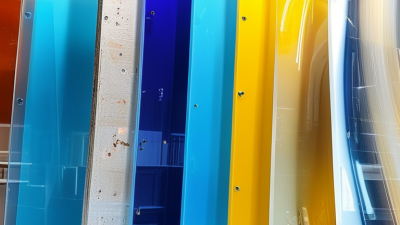
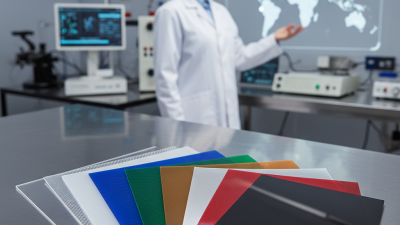
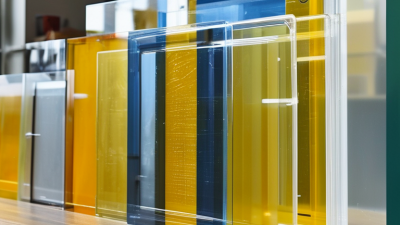
Lucite sheets appear wherever designers need light, clarity, and controlled visual impact. They are acrylic sheets, valued for being lighter than glass and easier to shape, drill, polish, and install. A clear panel can protect a museum display, divide an office, or cover a retail fixture without making the space feel closed. Frosted and colored versions add privacy, branding, or a softer glow.

The material also performs well in practical settings. Sign makers use lucite sheets for crisp lettering and illuminated panels. Interior designers use them for shelves, furniture surfaces, room dividers, and decorative wall features. Manufacturers may choose them for machine guards, equipment covers, and transparent enclosures. In a bathroom, a textured acrylic panel can filter light while hiding direct views. Small details matter, though. Edges may scratch, drilling can create stress cracks, and outdoor exposure can change the surface over time.

Otto Röhm, whose work helped establish modern acrylic materials, described acrylic as “a glass-like material with the toughness of an organic polymer.” That balance explains much of its appeal. It is not unbreakable. It is not always the cheapest option. Still, its combination of low weight, visual clarity, and fabrication flexibility makes it useful across many industries.

Choosing the correct thickness, finish, color, and grade remains essential. A display panel and a safety guard face different demands. Even a beautiful sheet can fail when its application is misunderstood. This article examines where lucite sheets are used, how professionals select them, and which limitations deserve closer attention.
What Are Lucite Sheets Used For?

Lucite Sheets Defined: PMMA With Up to 92% Visible-Light Transmission

What Are Lucite Sheets Used For?

Lucite sheets are PMMA panels valued for clarity, low weight, and practical design flexibility. High-grade PMMA can transmit up to 92% of visible light, according to technical data referenced in ISO 13468-1 testing. That performance allows daylight to pass through while maintaining a clean, glass-like appearance. The material appears in retail displays, indoor partitions, lighting covers, protective screens, machine guards, and architectural features.

A 2024 acrylic sheets market analysis by Grand View Research identifies construction, signage, and transportation as important application areas. These uses reflect PMMA’s balance of impact resistance and easy fabrication. Workshops can cut, drill, polish, bend, and thermoform sheets into custom shapes. A transparent divider can be produced with less handling weight than comparable glass. That difference matters during installation.

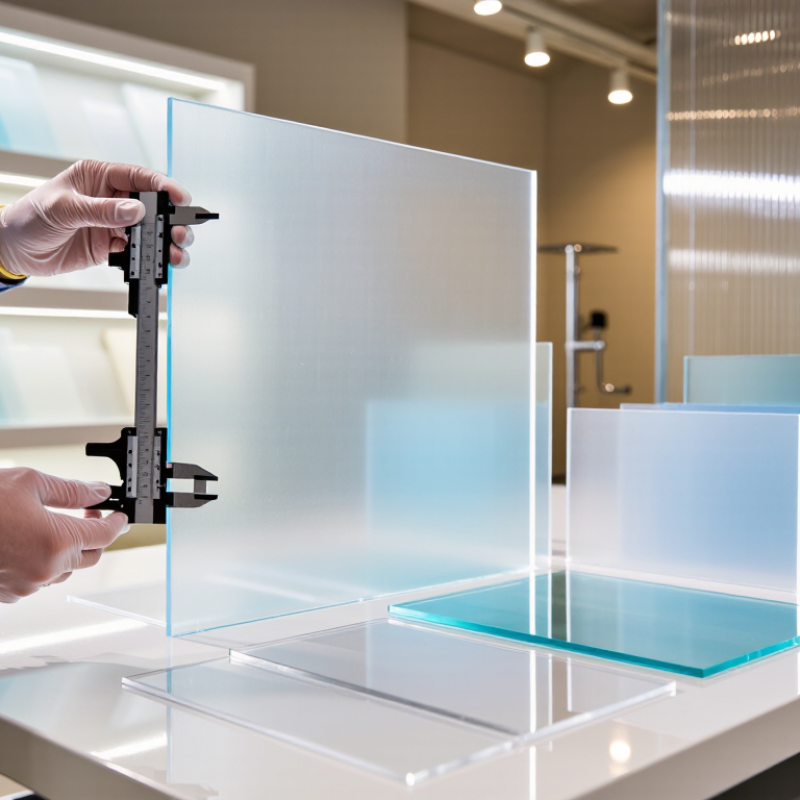
But 92% transmission is not universal. Thickness, color, surface texture, additives, and scratches can reduce clarity. Dust shows quickly. Heat can also cause distortion when designers ignore operating limits. From practical fabrication experience, accurate measurements matter more than attractive specifications. A small cutting error may waste an entire panel. PMMA can be an excellent choice, yet it still needs suitable thickness, edge finishing, cleaning methods, and support spacing for the intended application.

Why Lucite Replaces Glass: About Half the Weight and 10–17× Impact Resistance

Lucite sheets are clear acrylic panels used for signs, display cases, room dividers, machine guards, and lightweight glazing. Their strongest advantage is practical: acrylic weighs about half as much as comparable glass. A 1-meter panel is easier to carry, drill, and install, especially in shops or workshops where one person handles the material.

Acrylic can also offer roughly 10–17 times greater impact resistance than ordinary glass. The exact figure depends on thickness, formulation, temperature, and the test method. It may bend or dent instead of breaking into sharp pieces. That makes it useful around busy counters, children’s areas, and equipment with moving parts. Still, “impact resistant” does not mean unbreakable. I have seen thin panels crack around poorly drilled holes. That detail is easy to overlook.

Tips: Measure the frame before ordering. Leave room for thermal expansion, because acrylic changes size more than glass. Use fine-tooth tools and support the sheet during cutting. Keep the protective film on until installation ends. Acrylic scratches more easily, so clean it with mild soap, water, and a soft cloth. Avoid rough paper towels and harsh solvents. For outdoor glazing or safety barriers, check the sheet’s tested rating and thickness instead of relying only on appearance.

What Are Lucite Sheets Used For? - Why Lucite Replaces Glass: About Half the Weight and 10–17× Impact Resistance
Performance or Use Dimension Acrylic Sheet Typical Glass Practical Application and Selection Benefit
Material density Approximately 1.18 g/cm³ Approximately 2.5 g/cm³ for common soda-lime glass Acrylic is about 53% lighter by volume, making it easier to transport, handle, and install.
Approximate weight at equal volume About 47% of the weight of ordinary glass About 2.1 times the weight of acrylic Useful for large panels, portable displays, partitions, light fixtures, and installations where structural load matters.
Impact resistance Typically about 10–17 times higher than ordinary glass, depending on thickness, test method, and product grade More brittle and more likely to fracture under a concentrated impact Suitable for protective glazing, machine guards, display cases, sports barriers, and interior partitions. Acrylic is not automatically bullet-resistant or unbreakable.
Visible light transmission Approximately 92% for clear sheet Approximately 88–90% for clear, uncoated glass Provides high clarity for picture frames, signage, display cases, skylights, aquariums, and light diffusers.
Thermal conductivity Approximately 0.19 W/m·K Approximately 1.0 W/m·K Acrylic conducts heat much more slowly, which can help reduce heat transfer in indoor partitions and display applications. It is not a substitute for insulated glazing in every building envelope.
Weather and sunlight performance Good outdoor durability when formulated and finished for exterior use Very good resistance to sunlight and weathering Acrylic is commonly used for outdoor signs, canopies, skylights, and covers, but the selected grade and edge protection affect long-term performance.
Scratch resistance More susceptible to surface scratching; hard-coated grades improve resistance Generally more resistant to everyday scratching Acrylic is preferable where low weight and impact safety are more important than maximum scratch resistance. Use non-abrasive cleaning methods.
Fabrication and shaping Can be cut, drilled, routed, polished, and thermoformed with suitable tools and processes Usually requires specialized cutting, drilling, or tempering processes Acrylic supports custom shapes, routed lettering, curved panels, furniture components, retail fixtures, and prototype parts.
Temperature capability Typical continuous-use range is around -40°C to 80°C, depending on grade and design Maintains performance at substantially higher temperatures than acrylic Acrylic is well suited to normal indoor and moderate outdoor environments; high-heat areas require heat-rated glazing or another material.
Chemical sensitivity Can craze or become damaged by some solvents, alcohols, strong cleaners, and incompatible sealants Generally more resistant to many cleaning chemicals, although some chemicals can still damage glass coatings or seals Use cleaners and adhesives specifically confirmed as compatible with acrylic for laboratory, retail, healthcare, and industrial installations.
Safety after breakage Usually cracks or deforms rather than producing sharp glass-like shards Ordinary annealed glass can break into sharp fragments; tempered glass breaks into smaller pieces Acrylic can reduce shard-related hazards in guards, partitions, display protection, and public-facing installations, subject to applicable safety requirements.
Common uses Signs, point-of-sale displays, protective screens, machine guards, skylights, aquariums, furniture panels, light covers, and transparent barriers Windows, doors, mirrors, cookware, high-temperature applications, vehicle glazing, and applications requiring strong scratch or heat resistance The best choice depends on the balance among weight, impact resistance, clarity, temperature, scratch resistance, chemical exposure, and code requirements.
Values are typical reference figures for clear acrylic sheet and common soda-lime glass. Actual performance varies with thickness, additives, coatings, manufacturing method, support conditions, and applicable testing standards.

Construction Uses: Glazing, Partitions, Signage, and Noise Barriers

Acrylic sheets, also called PMMA sheets, serve practical roles in modern construction. Their clarity makes them suitable for interior glazing, skylight panels, and protective screens. Clear acrylic can transmit about 92% of visible light, according to common industry technical data. It is lighter than glass, which can simplify handling on busy sites. The U.S. Department of Energy reports that windows can account for 25–30% of residential heating and cooling energy use. Acrylic alone cannot solve that problem. Frame design, seals, solar control, and installation quality still matter.

Partitions are another useful application. Frosted or textured sheets divide offices, clinics, and retail areas while preserving daylight. For signage, colored, opaque, and backlit acrylic supports readable wayfinding panels and dimensional lettering. It also allows clean machining for custom shapes. Construction teams should specify thickness, edge finishing, fasteners, and UV exposure conditions. Small details become visible later.

Noise barriers require stricter engineering. The Federal Highway Administration states that well-designed highway barriers commonly provide about 5–10 decibels of noise reduction. Acrylic panels can maintain sightlines near roads, balconies, and rail corridors, but transparent surfaces need strong framing and bird-safety consideration. They are not automatically suitable for every elevation. Acrylic expands more than glass; ASTM D696 testing places its thermal expansion near 70 × 10⁻⁶ per °C. That movement can cause cracking when installers leave insufficient clearance. It also scratches more easily than glass, an inconvenient weakness worth admitting.

Retail and Display Uses: Formed Fixtures, Shelves, Cases, and POP Graphics

Lucite sheets, commonly known as acrylic sheets, bring a clean, glass-like appearance to retail displays. Their lighter weight makes installation easier, especially for temporary fixtures and store renovations. Clear panels help products remain visible from several angles. Frosted or colored sheets can create controlled contrast without blocking the merchandise.

Formed acrylic works well for product risers, curved holders, brochure pockets, and custom counter fixtures. Heat shaping allows fabricators to produce smooth bends instead of assembling several flat pieces. Shelves can support lightweight packaged goods, cosmetics, accessories, or small electronics. However, shelf thickness and span require careful planning. A thin sheet may sag under repeated loading. I have seen attractive displays fail because the support spacing looked acceptable but ignored the product weight.

Clear cases protect samples from dust and frequent handling while keeping details easy to inspect. Hinged doors, polished edges, and discreet fasteners improve daily use. Sharp corners can still cause problems. Rounded edges are safer and feel more refined. Acrylic also suits point-of-purchase graphics, including price panels, promotional signs, and layered lettering. Printed films or direct graphics can add color, though alignment errors become obvious under bright store lighting. Allowing for thermal expansion matters near strong lamps or sunny windows. Even careful designs may need adjustment after installation. Retail traffic reveals weaknesses that drawings often miss.

Common Lucite Sheet Uses in Retail and Displays

Typical fabrication thickness ranges vary by application: thinner sheets are commonly used for POP graphics, while shelves and structural display cases generally require thicker material for added rigidity.

Fabrication Standards: Cutting, Thermoforming, Bonding, and ASTM Testing

What Are Lucite Sheets Used For?

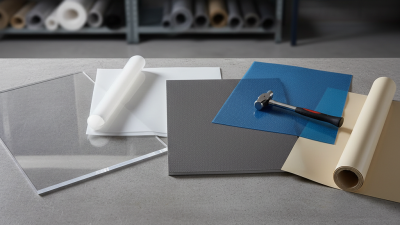
Fabrication quality determines whether acrylic sheets become reliable displays, guards, signs, or formed covers. Cutting should use a sharp carbide-tipped blade, steady feed, and protective masking. Excessive heat can melt the edge and create hidden stress.

ASTM D788 classifies acrylic sheet materials, while ASTM D638 and D790 evaluate tensile and flexural performance. These tests help fabricators compare batches instead of trusting appearance alone.

Thermoforming usually begins near 150–180°C, depending on thickness, grade, and forming speed. Even heating matters. A cold center can cause whitening, while overheated corners may sag.

Bonding requires clean, square edges and controlled solvent or reactive adhesive application. Poorly prepared joints often develop bubbles or crazing after assembly. ASTM D1003 measures luminous transmittance and haze, useful for transparent panels and optical covers. It is a practical check, not a guarantee of long-term service.

According to Plastics Europe’s Plastics—The Fast Facts 2024, global plastics production reached about 413.8 million metric tons in 2023. That scale makes fabrication waste worth measuring.

Reusing protected offcuts can reduce waste, though contaminated pieces may fail quality checks. I have found that rushed polishing creates more problems than it solves.

Better process records, temperature logs, and sample testing usually produce more dependable results.