China Top ABS Plastic Manufacturers for Global Buyers
Choosing among China’s leading ABS plastic manufacturers is not simply a price comparison. Buyers need to match resin grades, production capacity, and quality controls to the product they actually make. A dashboard housing, appliance panel, and injection-molded connector may all use ABS, yet each can demand different impact strength, heat resistance, color consistency, and flow behavior. Small differences matter. A sample can look right under showroom lights and still behave differently on a production line.
Materials scientist Chris DeArmitt is often associated with this reminder: “Plastic is not the problem; the problem is what we do with it.” For global buyers, that idea makes supplier selection more practical. Ask how a manufacturer controls incoming materials, manages batches, and documents test results. Request technical data for the specific grade, not a generic brochure. Then compare samples under your own processing conditions. A glossy data sheet is useful, but it is not proof of consistent performance.
This guide examines China-based manufacturers through factors buyers can verify: product range, customization, export experience, communication, and quality documentation. It does not treat a single ranking as universal; the right supplier depends on the application, order volume, and service expectations. And there is room for caution. A factory may describe itself as a direct producer, while its actual capabilities need closer checking. Clear questions, written specifications, and repeat testing help turn a promising quotation into a dependable sourcing decision.
Understanding ABS Plastic and Its Global Applications
ABS, or acrylonitrile butadiene styrene, is a thermoplastic valued for its balance of toughness, stiffness, and ease of processing. Its three components contribute different qualities: acrylonitrile supports heat and chemical resistance, butadiene adds impact strength, and styrene helps create a smooth, rigid surface. The exact balance varies by grade. That matters.
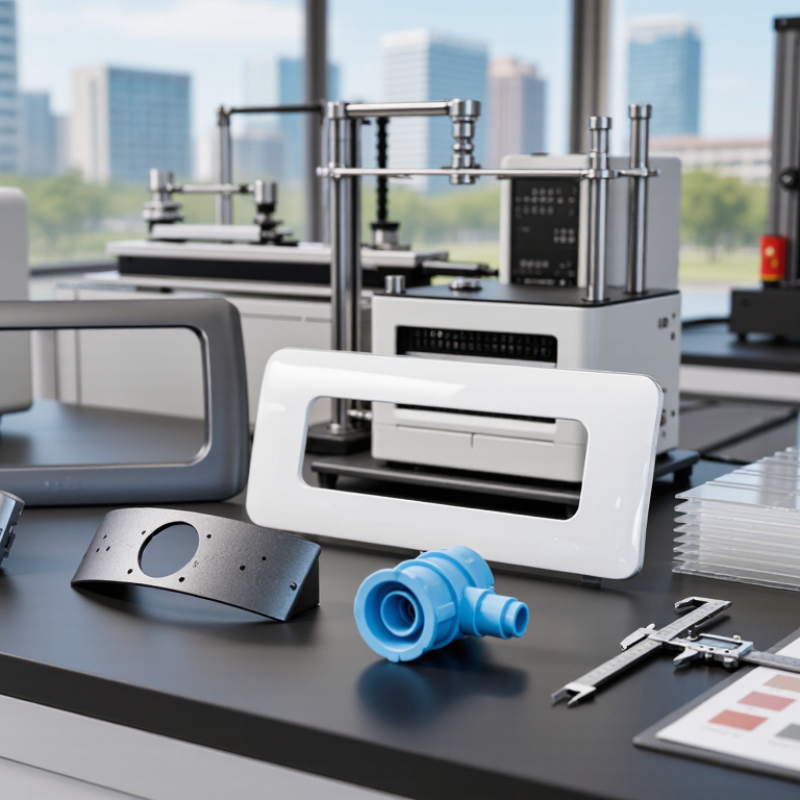
In practical use, ABS appears in appliance housings, vehicle interior parts, protective enclosures, toys, and consumer electronics. A molded enclosure can feel solid while remaining light enough for everyday handling. The material also accepts color and surface finishing well, which helps manufacturers produce consistent-looking parts. For designers, it is often a workable choice for complex shapes and high-volume molding.
ABS is not ideal for every setting. Prolonged sunlight can cause some grades to fade or become brittle, and performance depends on formulation, wall thickness, and processing conditions. A part intended for outdoor use may need a UV-stabilized grade or another material. Check the application, not just the resin name. Buyers should request technical data and samples, then evaluate impact strength, heat exposure, surface quality, and dimensional stability under realistic conditions. Lab figures help, though real parts can still surprise you.
China’s ABS Manufacturing Landscape and Key Production Regions
China’s ABS manufacturing landscape reflects the country’s broad petrochemical base and large plastics-processing sector. Some facilities produce base resin, while others compound it with additives for particular performance needs. That difference matters. A resin plant and a compounding workshop may serve very different buyers.
Eastern coastal provinces, including Jiangsu and Zhejiang, have dense networks of chemical suppliers, compounders, and parts manufacturers. Their proximity can shorten the path from resin selection to molded components. Guangdong, especially the Pearl River Delta, is closely linked to appliance, electronics, and consumer-goods production. In the north and northeast, established petrochemical infrastructure supports resin and related materials production. The map is not perfectly neat; capabilities vary between neighboring industrial parks.
For global buyers, regional reputation is only a starting point. Ask whether a supplier controls polymerization, compounding, or both, and request recent data on impact strength, melt flow, and color consistency. Check how samples compare across batches. Small differences can affect molding cycles. Port access and inland transport also matter, especially when schedules are tight. A regional label alone tells little about actual process control, and that is easy to overlook.
China Top ABS Plastic Manufacturers for Global Buyers
China’s ABS Manufacturing Landscape and Key Production Regions
ABS production is concentrated across industrial regions including Zhejiang, Jiangsu, Shandong, Liaoning, and Guangdong. The chart shows a general engineering benchmark—not a regional or supplier ranking: unfilled ABS commonly has a density of about 1.04–1.07 g/cm³. Actual values depend on grade and formulation, so buyers should confirm each product’s technical data sheet.
How to Evaluate Chinese ABS Manufacturers and Product Grades
China Top ABS Plastic Manufacturers for Global Buyers
How to Evaluate Chinese ABS Manufacturers and Product Grades
Choosing an ABS supplier means checking more than price and appearance. Grand View Research valued the global ABS market at about USD 29.1 billion in 2023, underscoring its broad use across consumer goods, vehicles, and electronics. But market growth does not guarantee consistent resin quality. Ask for a current technical data sheet, safety data sheet, and batch-specific certificate of analysis. Check whether reported values come from recognized methods, such as ASTM D638 for tensile properties or ASTM D256 for impact resistance.
Grade selection should match the finished part. General-purpose ABS may suit a desk accessory, while heat-resistant or flame-retardant grades may better fit a warm enclosure. Compare melt flow rate, impact strength, heat-deflection temperature, and color tolerance under the same test conditions. Request samples from more than one production lot, then test them using your own molding settings. A neat datasheet is useful, but it cannot show every processing variation. That gap deserves attention.
Tips: Ask suppliers how they control recycled content, color changes, and lot traceability. Confirm whether quoted values are typical or guaranteed. Keep a small molded sample from each approved lot for later comparison. Good questions matter.
Quality Standards, Certifications, and Export Requirements
For global buyers, ABS quality starts with a clear grade specification, not a supplier’s general claim. Request the technical data sheet and a batch-specific certificate of analysis. Check melt flow rate, impact strength, tensile properties, color, and moisture condition against agreed limits. ISO 2580-1 covers ABS molding and extrusion materials; ASTM D256 and ASTM D638 provide common methods for impact and tensile testing. Ask which test method, specimen condition, and acceptance range the supplier actually uses. Small details matter.
Certifications need careful review. An ISO 9001 certificate indicates a quality-management system, but it does not certify every resin batch or prove product performance. Verify its validity, site scope, and issuing body. For electrical or restricted-substance applications, request relevant test reports and confirm whether requirements such as RoHS apply in the destination market. A certificate without traceable grade and lot numbers is weak evidence. That is easy to miss.
Export documents should match the shipment and destination: commercial invoice, packing list, transport document, and accurate product description are typical essentials. Confirm the HS classification, origin documentation, and any destination-specific chemical declarations with a qualified customs professional. The OECD’s 2022 Global Plastics Outlook reports that global plastics production reached 460 million tonnes in 2019, while only 9% of plastic waste was recycled. This broad figure is not ABS-specific, but it underlines why buyers should request credible material and recycling claims. Paperwork can still be imperfect; resolve discrepancies before loading, not after arrival.
Choosing an ABS Supplier for Global Procurement
Choosing an ABS supplier for global procurement means checking consistency, not just price.
Grand View Research valued the global ABS market at USD 29.55 billion in 2023 and forecast 5.1% annual growth from 2024 to 2030. That growth can widen supplier options, but it may also make capacity and lead-time checks more important. Ask for grade-specific technical data, including melt flow rate and impact strength. Confirm that test results match the material offered for your application. Paperwork matters. So does a molded sample.
For cross-border orders, assess production capacity, export experience, packaging, and shipment tracking. Request a recent certificate of analysis for each production batch, plus a clear process for handling quality claims. A factory audit or video walkthrough can help verify equipment and storage conditions, though neither replaces independent testing. A polished data sheet can still miss real-world molding issues. That is worth remembering.
Tips: Send the supplier your target color, operating temperature, and molding conditions before requesting samples. Compare quotations using the same grade, shipment terms, and inspection scope. Keep a retained sample from the approved batch for later comparison.