Top Types of Opaque Plastic Sheeting for Global Buyers
Opaque plastic sheeting is no longer a single-purpose material. Global buyers use it for construction barriers, agricultural covers, packaging protection, floor protection, and industrial liners. Each application demands a different balance of opacity, tear strength, flexibility, and weather resistance.
Polyethylene remains the common starting point. LDPE offers flexibility and easy heat sealing, while HDPE provides greater stiffness and puncture resistance. PVC sheeting can deliver strong opacity and dimensional stability, but plasticizer migration and end-of-life concerns require careful review. PP is lighter and more heat resistant. Multilayer films add performance through combined structures. Recycled-content grades are also gaining attention, although color consistency and mechanical performance may vary between batches.
The market context is substantial. PlasticsEurope reported global plastics production of about 414 million tonnes in 2023. Grand View Research estimated the broader plastic films and sheets market at more than USD 100 billion in 2023, with continued growth expected through the decade. These figures are useful benchmarks, not direct measurements of opaque plastic sheeting. Definitions differ across reports. That matters.
For buyers, product selection should begin with service conditions rather than price alone. A black polyethylene sheet may block sunlight effectively, yet fail under repeated folding. A reinforced PVC sheet may survive demanding handling, but weigh more and cost more. Ask for thickness tolerance, tensile data, UV exposure results, recycled content, and batch documentation. Small details matter.
This guide examines the top types of opaque plastic sheeting for global buyers. It also considers practical trade-offs, supplier evidence, and specifications that are easy to overlook. No material is perfect. Good purchasing decisions remain application-specific, documented, and open to review.
What Opaque Plastic Sheeting Is and Why Global Buyers Use It
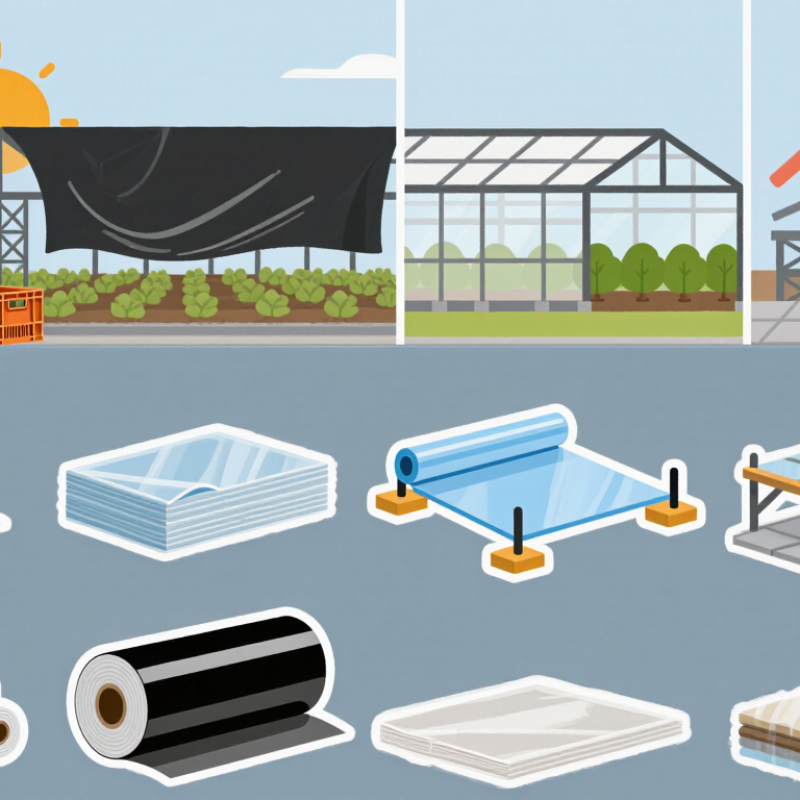
Opaque plastic sheeting is a flexible plastic film designed to block most visible light. Unlike clear film, it hides materials, equipment, or work areas behind its surface. Common options include polyethylene, PVC, and polypropylene sheeting. Each material offers different levels of strength, flexibility, chemical resistance, and weather performance.
Global buyers use opaque plastic sheeting for practical reasons. Construction teams cover floors, scaffolding, and stored materials to reduce dust, moisture, and unwanted visibility. Agricultural users may use dark sheeting for ground cover, weed control, or temporary protection.
Manufacturers also select it for privacy screens, pallet wrapping, temporary partitions, and protective liners. A black sheet can reduce light exposure, while white sheeting may reflect heat more effectively in outdoor conditions.
Performance depends on the specification, not only the color. Buyers should check thickness, tear resistance, roll width, UV stabilization, temperature range, and sealing compatibility. A thin sheet may lower shipping costs, but it can fail around sharp edges or in strong wind. That trade-off is easy to underestimate. I have found that sample testing is more reliable than judging film by appearance alone. Test the sheet under expected sunlight, tension, moisture, and handling conditions. Recycling requirements also matter, since mixed materials can complicate disposal. Regional packaging standards, documentation, and consistent batch quality help reduce purchasing risk across international supply chains.
Key Materials Used in Opaque Plastic Sheeting
Opaque plastic sheeting starts with material selection, not color alone. For many buyers, polyethylene is the practical baseline. It is lightweight, weldable, moisture resistant, and available in several thicknesses. Black PE blocks light effectively and often suits ground covers, temporary partitions, and packaging liners. However, thin film can tear around sharp edges. Thickness matters.
Polyvinyl chloride provides a heavier, more structured sheet. Its surface can resist abrasion, and flexible grades remain useful for curtains, covers, and industrial barriers. Plasticizers may affect flexibility over time, especially under heat or ultraviolet exposure. Ask for test data rather than relying on appearance. Polypropylene is stiffer and offers good chemical resistance in many routine environments. It can be a sensible choice for reusable panels, though cold conditions may make it less forgiving.
Ethylene-vinyl acetate, or EVA, adds softness and impact absorption. It works well where a sheet must bend repeatedly without feeling brittle. EVA is not automatically the best outdoor option; formulation and UV stabilization still deserve scrutiny. For demanding sealing or flexible applications, thermoplastic polyurethane may offer stronger elasticity and abrasion performance. That performance usually brings higher cost. In procurement, compare thickness tolerance, opacity, tensile strength, temperature range, and actual roll dimensions. A sample test under real handling conditions can reveal curling, odor, or weak seams before shipment. Specifications are useful, but they are not the whole story.
Common Types of Opaque Plastic Sheeting by Performance
Opaque plastic sheeting serves different jobs, and color alone does not define performance. Black polyethylene blocks most visible light, making it useful for temporary partitions, ground covers, and equipment protection. White sheeting reflects sunlight and can reduce surface heating, although it may create reflected glare. Gray or multilayer films often balance light control with a cleaner appearance.
For outdoor use, ultraviolet resistance matters more than thickness alone. A stabilized film can remain flexible through repeated sun exposure, while untreated plastic may become brittle at folded edges. Moisture-resistant sheets work well under concrete or around stored materials, but seams still need careful overlapping. Reinforced mesh sheeting adds tear resistance when wind pulls against grommets. It is heavier, though. That trade-off is easy to miss.
High-performance options include flame-retardant, chemical-resistant, and insulated plastic sheets. Flame-retardant material should be selected from verified test data, not vague sales language. Chemical resistance depends on the substance, concentration, temperature, and contact time. Insulated laminates can slow heat transfer, but they are not replacements for engineered thermal barriers. In practical purchasing, check thickness, tensile strength, puncture data, UV testing, and operating temperature. Small sample trials reveal weaknesses that specification tables sometimes hide. No sheet fits every site.
Top Types of Opaque Plastic Sheeting for Global Buyers - Common Types of Opaque Plastic Sheeting by Performance
| Plastic Sheeting Type | Typical Opacity | Typical Thickness Range | Key Performance Characteristics | Temperature Performance | Common Applications | Main Limitations | Recycling Consideration |
|---|---|---|---|---|---|---|---|
| Opaque LDPE Sheeting | High; commonly produced in black, white, or solid colors | Approximately 0.05–0.50 mm for general-purpose film and light sheeting | Flexible, soft, good tear resistance, strong moisture barrier, easy to heat-seal | Useful at low temperatures; continuous-use performance is commonly around -50°C to 80°C, depending on formulation | Ground covers, construction protection, agricultural covers, packaging liners, temporary barriers | Lower stiffness and puncture resistance than HDPE; can creep under prolonged load | Generally identified as polyethylene and recyclable where suitable collection and film-recycling systems exist |
| Opaque HDPE Sheeting | High; black and white grades can provide strong light blocking | Approximately 0.05–1.00 mm for films and thin sheets | High stiffness, good tensile strength, strong moisture resistance, good chemical resistance | Common service range is approximately -50°C to 80°C, subject to grade and loading | Industrial liners, pond and tank liners, vapor barriers, agricultural use, protective sheeting | Less flexible than LDPE; folding and sealing may require more controlled processing | Usually categorized as polyethylene; recycling depends on contamination, thickness, color, and local facilities |
| Opaque LLDPE Sheeting | High when pigments or masterbatch are added | Approximately 0.05–0.50 mm for flexible film applications | Excellent puncture and impact resistance, high elongation, flexible, suitable for demanding liners | Good low-temperature flexibility; practical upper-use temperature is commonly near 80°C | Heavy-duty covers, geomembrane products, agricultural films, waste containment, industrial packaging | May be more difficult to process for applications requiring high rigidity or dimensional stability | Polyethylene recycling stream where accepted; clean, single-material sheets are generally easier to recover |
| Opaque PVC Sheeting | High; available in solid colors and light-blocking grades | Approximately 0.20–5.00 mm, depending on flexible or semi-rigid construction | Good abrasion resistance, good dimensional stability, flame-retardant formulations available, weldable | Flexible grades can perform around -20°C to 60°C; plasticizer and formulation selection is important | Curtains, industrial partitions, flooring protection, signage substrates, truck and equipment covers | Can become brittle in cold conditions; plasticizer migration and additive compatibility require evaluation | Recycling routes vary; additives and mixed-material construction can limit recyclability |
| Opaque PP Sheeting | High when filled or pigmented; solid colors are common | Approximately 0.20–3.00 mm for film, sheet, and corrugated board formats | Low density, good chemical resistance, higher heat resistance than polyethylene, good fatigue resistance | Typical continuous-use range is approximately 0°C to 100°C; low-temperature impact resistance may be limited | Reusable packaging, industrial dividers, equipment protection, chemical-resistant liners, rigid sheet products | Can become brittle in cold environments; less flexible than LDPE and LLDPE | Commonly recognized as polypropylene; recovery depends on local rigid-plastic or film-recycling capability |
| Opaque EVA Sheeting | High with suitable pigment or filler systems | Approximately 0.10–3.00 mm for flexible films and specialty sheets | Soft, flexible, good impact absorption, good low-temperature performance, heat-sealable | Often remains flexible below 0°C; maximum service temperature depends strongly on vinyl acetate content and formulation | Cushioning layers, protective covers, flexible liners, agricultural and specialty packaging applications | Lower stiffness and load-bearing capacity; may show greater surface tack or deformation under heat | Recycling availability is limited in many regions; material composition should be confirmed before disposal |
| Reinforced Opaque Plastic Sheeting | Very high; opaque coating or film is combined with a scrim or mesh | Approximately 0.20–1.00 mm for coated-fabric constructions | High tear strength, improved dimensional stability, better wind resistance, suitable for repeated handling | Temperature capability depends on the coating and reinforcement; product-specific testing is recommended | Temporary buildings, truck covers, outdoor partitions, industrial curtains, event and storage enclosures | Heavier and less flexible than unreinforced film; seams and edges may require specialized welding or fastening | Multi-material construction can make mechanical recycling difficult unless the layers are separated |
Note: Performance ranges are typical industry guidance and can vary with resin grade, additives, pigment concentration, reinforcement, processing method, and finished-product design.
How to Match Sheeting Types With Industrial Applications
Opaque plastic sheeting performs best when its structure matches the working environment. Black polyethylene blocks sunlight and supports ground covers, construction barriers, and non-potable water containment. White sheeting reflects heat, making it useful for temporary enclosures and warehouse partitions. Colored sheets can improve zone visibility. That matters on busy sites.
Agricultural buyers should check ultraviolet resistance, flexibility, and puncture strength before choosing a film. A thin black sheet may protect soil, but it can tear against sharp stones. Reinforced laminated sheeting handles repeated movement better. For packaging and manufacturing, a smooth surface supports cleaner handling. Textured surfaces can add grip around equipment or walkways. Measure the real exposure.
Thickness alone can mislead. A dense, thin sheet may outperform a thicker product with weak seams. Check tensile strength, tear resistance, operating temperature, and joining methods. Ask for test data, not only a sales description. Local fire, environmental, and food-contact requirements may also affect the specification. A common mistake is choosing one opaque sheet for every task. It saves time initially, but replacement costs can rise quickly. The first choice is not always right.
Global Buyer Criteria for Quality, Compliance, and Supply
Top Types of Opaque Plastic Sheeting for Global Buyers
Global buyers often compare LDPE, HDPE, PVC, and reinforced composite sheeting. Each type serves different conditions.
LDPE feels flexible and suits temporary covers, liners, and light-duty protection. HDPE offers higher tensile strength for construction screens, agricultural barriers, and industrial partitions. PVC provides a heavier, more stable sheet where abrasion resistance matters. Reinforced sheeting adds woven strength between plastic layers.
Quality begins with measurable specifications, not attractive samples.
Request thickness tolerance, tensile strength, tear resistance, opacity, and roll-weight data. A 0.20 mm sheet should not quietly vary across the roll. Small defects matter. Inspect sample rolls for pinholes, brittle edges, uneven coating, and weak welds.
In my experience, buyers sometimes focus on unit price and overlook usable coverage. That mistake can increase installation waste.
Compliance documents should match the destination market and the product’s intended use.
Ask for material declarations, safety data, test reports, and batch traceability. If the sheet contacts food, soil, or drinking water, require the relevant approved testing before purchase.
Certificates alone are not enough. Verify issuing laboratories and test dates. Supply reliability also needs evidence: production capacity, monthly output, lead times, packaging details, and backup plans for resin shortages.
Keep a pre-shipment inspection requirement in the contract. It may slow one order. It can prevent a larger dispute.
Forecasting remains imperfect, so maintain a practical buffer for seasonal demand and port delays.
Related Posts
-
2026 Best Opaque Plastic Sheeting Options for Your Projects?
-

2026 Best Coloured Plastic Sheets for Global Buyers?
-
Top 10 Clear Plastic Sheets for Your Business Needs?
-

The Ultimate Guide to Choosing the Best Transparent Sheet in 2025
-

Top Benefits of Polycarbonate Multiwall Sheets for Your Projects?
-
2026 Best Polycarbonate Sheets for Global Buyers?