Why Choose Clear Sheets for Global Sourcing?
Global sourcing can make clear sheets more accessible, but lower prices should never be the only reason to buy.
Dr. George Wypych, a respected polymer materials researcher, has emphasized, “Weathering of polymers is a complex process.” That principle matters when selecting clear sheets for international projects. A sample may look flawless under warehouse lighting. Months later, ultraviolet exposure, humidity, heat, or cleaning chemicals can change its appearance. Optical clarity is only one part of performance.
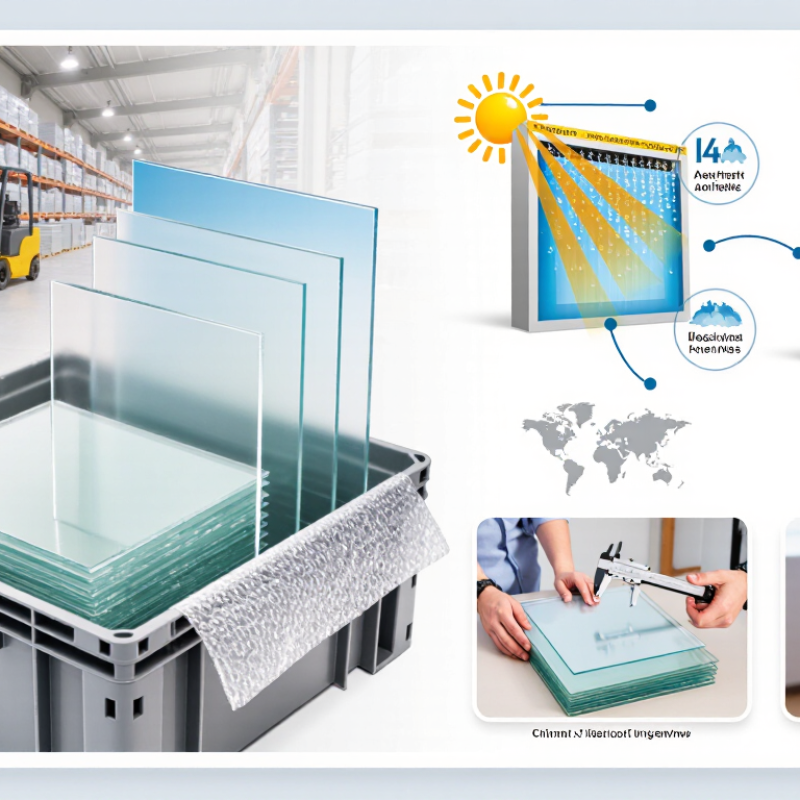
Experienced buyers compare resin type, thickness tolerance, surface hardness, impact resistance, and light transmission. They also request batch records, technical data sheets, inspection reports, and performance-test results. A reliable supplier should explain how production controls reduce scratches, bubbles, warping, and inconsistent color. Packaging deserves attention too. Thin protective film, corner guards, and moisture-resistant crates can prevent expensive damage during long-distance transport.
Global sourcing also creates practical advantages. Multiple supplier regions may improve capacity planning, shorten lead times, and support more competitive quotations. However, freight costs, customs procedures, currency changes, and communication delays can quickly reduce those savings. Compliance documents must be checked for the target market and application.
No supplier is perfect. No specification predicts every real-world condition. That is worth remembering.
A small pilot order can reveal problems before full production. Buyers should inspect sheets under daylight, measure thickness at several points, and test fabrication compatibility. Clear sheets are not simply transparent products. They are engineered materials whose value depends on consistency, traceability, and dependable performance from factory to final installation.
What Are Clear Sheets and Why Are They Used Globally?
Why Choose Clear Sheets for Global Sourcing?
What Are Clear Sheets and Why Are They Used Globally?
Clear sheets are transparent, flat materials used when visibility and protection must work together. They may be made from acrylic, polycarbonate, PET, or other engineered plastics. Each material offers different levels of clarity, strength, flexibility, and heat resistance.
In practical sourcing projects, clear sheets appear in packaging windows, protective covers, display panels, machine guards, and interior partitions. Their transparency helps users inspect products without opening containers. Their flat shape also supports efficient cutting, stacking, and shipping. Lightweight sheets can reduce handling effort and freight volume, although this depends on thickness and packing design.
Global buyers usually compare light transmission, haze, impact resistance, surface hardness, and dimensional tolerance. They should request test reports and production samples before placing large orders. A sheet may look perfectly clear under showroom lighting. It can show scratches under warehouse lamps. Clear does not mean flawless.
Regional climate also matters. High heat, humidity, or strong sunlight can affect performance over time. Some applications need UV resistance or tighter thickness control. Others need easy machining and low material waste. A reliable sourcing process checks these details early, rather than trusting appearance alone. Cost is important, but the cheapest sheet may create higher replacement and packaging expenses. That part deserves more reflection.
Which Materials and Specifications Define Clear Sheet Quality?
Why Choose Clear Sheets for Global Sourcing?
Clear sheet quality starts with the material, not the marketing description. Acrylic offers strong transparency and a polished appearance. Polycarbonate handles impact better, especially around machinery or public areas. PETG is easier to form and can suit display components. Each option has weaknesses. Acrylic may crack under sharp impact, while polycarbonate can scratch without a protective coating.
Specifications deserve careful review. Ask for thickness, dimensional tolerance, light transmittance, haze, surface finish, and color consistency. A 3 mm sheet should not quietly vary between 2.8 and 3.2 mm. That difference can affect assembly. For outdoor use, confirm UV resistance and temperature performance. Check flatness too. A clear sheet may look excellent on a sample but warp after transport or heat exposure. I have seen this happen when packaging protected the edges but not the full surface.
Tips: Request a current technical data sheet and a physical sample. Measure thickness at several points. Inspect scratches under angled light. Confirm protective film direction, packing method, and test standards before placing a large order. Do not rely on “crystal clear” alone. It is vague. For global sourcing, keep written approval records and compare batch samples. Even careful specifications can miss a practical detail, so review the sheet after cutting and installation.
Why Choose Clear Sheets for Global Sourcing? - Which Materials and Specifications Define Clear Sheet Quality?
| Material | Typical Density | Typical Light Transmission | Common Thickness Range | Typical Continuous Use Temperature | Key Strengths | Important Quality Specifications | Typical Global Sourcing Applications |
|---|---|---|---|---|---|---|---|
| Clear PET / PETG | Approximately 1.27–1.38 g/cm³ | Approximately 85–90% for clear grades | 0.25–6 mm | Approximately -40°C to 70°C, depending on grade | Good clarity, low weight, strong impact resistance, easy thermoforming, and good dimensional stability | Thickness tolerance, haze, gloss, impact resistance, forming performance, surface protection, and compliance with the required food-contact or packaging regulations | Packaging, machine guards, point-of-sale displays, protective covers, and formed trays |
| Clear Acrylic / PMMA | Approximately 1.17–1.20 g/cm³ | Up to approximately 92% for high-quality cast sheet | 1–100 mm | Approximately -30°C to 80°C | Excellent optical clarity, high surface gloss, good weatherability, and strong resistance to ultraviolet exposure | Haze, yellowness index, light transmission, thickness tolerance, surface defects, color consistency, and outdoor weathering performance | Architectural glazing, signage, lighting covers, displays, partitions, and decorative panels |
| Clear Polycarbonate / PC | Approximately 1.20 g/cm³ | Approximately 86–90% for clear grades | 0.5–20 mm | Approximately -40°C to 115°C | Very high impact strength, low-temperature toughness, good dimensional stability, and excellent design flexibility | Impact strength, optical distortion, haze, UV-resistant coating, flame rating where required, thickness tolerance, and stress-cracking resistance | Safety glazing, equipment guards, machine windows, transportation components, and protective barriers |
| Clear PVC | Approximately 1.30–1.45 g/cm³ | Approximately 80–90%, depending on formulation | 0.2–10 mm | Approximately -15°C to 60°C for flexible or standard clear grades | Cost-effective, chemically resistant, easy to fabricate, and available in rigid or flexible forms | Plasticizer type, hardness, haze, thickness tolerance, chemical resistance, odor, migration performance, and low-temperature flexibility | Industrial curtains, folders, packaging, tubing-related components, protective covers, and interior panels |
| Clear Polypropylene / PP | Approximately 0.90–0.91 g/cm³ | Approximately 80–90%, depending on nucleation and grade | 0.3–12 mm | Approximately 0°C to 100°C, with grade-specific variation | Low density, strong chemical resistance, moisture resistance, fatigue resistance, and suitability for repeated-use products | Clarity, stiffness, weldability, impact performance, thickness tolerance, chemical resistance, and required regulatory compliance | Reusable packaging, laboratory items, folders, dividers, containers, and chemical-handling applications |
| Clear Polystyrene / GPPS | Approximately 1.04–1.06 g/cm³ | Approximately 88–90% for clear grades | 0.5–6 mm | Approximately -20°C to 70°C | Good clarity, low cost, easy processing, and suitable rigidity for disposable or indoor products | Haze, brittleness, impact strength, thickness tolerance, surface finish, and compliance for the intended packaging or consumer application | Disposable packaging, display inserts, sample trays, laboratory disposables, and indoor promotional materials |
| Clear Glass | Approximately 2.50 g/cm³ | Approximately 89–91% for standard clear float glass | 2–19 mm for common flat-sheet formats | Generally suitable for high-temperature environments, subject to thermal-shock limitations | Excellent scratch resistance, high optical stability, non-combustibility, chemical durability, and long service life | Flatness, visible distortion, inclusions, scratches, edge quality, thickness tolerance, heat treatment, safety-glazing classification, and thermal performance | Architectural glazing, laboratory equipment, furniture, display cases, and high-temperature viewing windows |
Note: Values are typical industry ranges for general comparison. Actual performance depends on resin formulation, manufacturing process, additives, surface treatment, thickness, testing method, and applicable regional standards.
How Does Global Sourcing Compare Suppliers, Costs, and Standards?
Why Choose Clear Sheets for Global Sourcing?
Global sourcing compares more than unit prices. It measures supplier consistency, landed cost, delivery risk, and technical compliance. Clear sheets make this comparison visible because buyers can test thickness, light transmission, haze, color, and surface defects. A practical sample review should include calipers, transmitted-light inspection, and packaging checks. Small variations become obvious under warehouse lighting. They can also affect fabrication yields and installation quality.
The World Bank’s 2023 Logistics Performance Index surveyed trade professionals across 139 economies. It evaluates customs, infrastructure, shipment quality, and delivery timeliness. These indicators help buyers judge whether a low-cost supplier can deliver reliably. Freight, insurance, duties, inspection, and damage allowances belong in the landed-cost model. A lower quote can still be expensive. This is often missed.
Standards create another comparison point. Buyers should request current material specifications, batch records, and independent test results. Depending on the application, relevant requirements may cover dimensional tolerances, flammability, optical performance, and chemical resistance. ISO’s 2023 survey reported more than 1.5 million valid ISO 9001 certificates worldwide, showing the scale of quality management systems. Certification supports credibility, but it does not replace product testing. Suppliers should provide traceable samples and corrective-action records. Even strong sourcing teams sometimes overvalue paperwork. Clear sheets reward a more disciplined approach: compare measurable performance, verified costs, and realistic delivery conditions.
Why Choose Clear Sheets for Global Sourcing?
Typical visible light transmission of clear sheet materials, compared with indicative 3 mm planning costs for international sourcing.
What Quality Checks Apply Before Clear Sheets Are Shipped?
Before clear sheets leave a supplier, quality control should inspect more than visual shine. Inspectors verify material type, thickness, width, and sheet count against purchase documents. A digital micrometer checks thickness at several points, including corners and the center. Small variations can affect cutting, glazing, or assembly. Measure again when results look unusual. That habit prevents confident mistakes.
Surface inspection uses bright, angled light. Inspectors look for scratches, bubbles, haze, inclusions, edge chips, and protective-film wrinkles. A clear sheet may appear perfect under warehouse lighting but reveal fine lines near a window. Film adhesion should also be checked by lifting a corner carefully, without damaging the surface. Random sheets from different pallets deserve attention. Not just the top sheet.
Dimensional checks confirm squareness, flatness, and cut-edge quality. For transparent materials, light-transmission or haze testing can support visual judgment. Packaging is inspected for corner guards, dry separators, moisture protection, labels, and movement inside the crate. Photos, batch numbers, test results, and signed inspection records create traceability. Sampling is practical, but it is not flawless. Some defects still escape detection. Buyers should define acceptance limits before production and request pre-shipment evidence, especially for large or repeated orders.
How Do Logistics, Regulations, and Sustainability Affect Sourcing?
Clear sheets can simplify global sourcing when logistics are planned around their physical limits. In sourcing projects, I have seen thin sheets arrive with edge damage after poorly secured transport. Strong corner protection, flat stacking, and moisture-resistant wrapping reduce these failures. Packaging should fit the shipment, not merely look protective. Oversized crates may increase freight costs and handling risks. Local cutting can lower shipping volume, but it may create quality-control problems. Clear specifications matter.
Regulations affect more than customs clearance. Buyers should confirm thickness tolerance, light transmission, fire performance, and permitted chemical content before placing large orders. Destination markets may require test reports, safety declarations, or recycling labels. Requirements can differ between construction, retail display, and industrial uses. A reliable supplier should provide traceable batch information and consistent documentation. I would not rely on a generic compliance statement. It may be outdated.
Sustainability requires a wider view. Clear sheets can support long service lives when they resist impact, weather, and repeated cleaning. Yet virgin material, protective films, and long-distance transport can increase environmental costs. Recycled content may help, although clarity and performance must be verified for each application. Lighter packaging can reduce emissions, but insufficient protection may cause replacement shipments. That defeats the purpose. I have also found that buyers sometimes select the lowest unit price too quickly. A lifecycle review, including waste, freight, and rejected pieces, gives a more honest sourcing decision.
Related Posts
-
2026 How to Use Transparent Plastic Sheets in Your Projects?
-

Top Uses of Transparent Sheet in Home and Office Applications?
-

Top 10 Benefits of Using Transparent Sheets for Your DIY Projects
-

Tips for Using Clear Sheets Effectively in Your Projects?
-

2026 Best Plastic Sheet Material Options for Every Need?
-

Why Choose Plexi Sheets for Your Next Project?