China Top 10 Polycarbonate Sheet Manufacturers for Buyers
Choosing among China’s top polycarbonate sheet manufacturers takes more than comparing prices. Buyers need to assess resin quality, sheet thickness, UV protection, impact resistance, and production consistency. A clear sample can look impressive under showroom lights, yet reveal uneven coating or waviness after installation. Details matter.
Hermann Schnell, the chemist associated with the development of polycarbonate, offers a useful perspective: “A sheet’s performance begins with the material and the way it is processed.” This is a concise paraphrase of his contribution, not a verified direct quotation. For buyers, that principle means asking manufacturers about resin specifications, extrusion controls, test methods, and batch traceability. It also means checking whether claims match the actual product. Not every brochure answers that.
This guide compares ten Chinese manufacturers through practical buyer criteria, including product range, customization, quality documentation, export experience, and communication. It is designed to help readers prepare sharper questions before requesting samples or quotations. No ranking can replace independent checks, and supplier information may change over time. Treat the shortlist as a starting point, then verify certifications and sample performance for your application. The right choice is rarely the loudest claim.
Polycarbonate Sheets: Types, Properties, and Common Uses
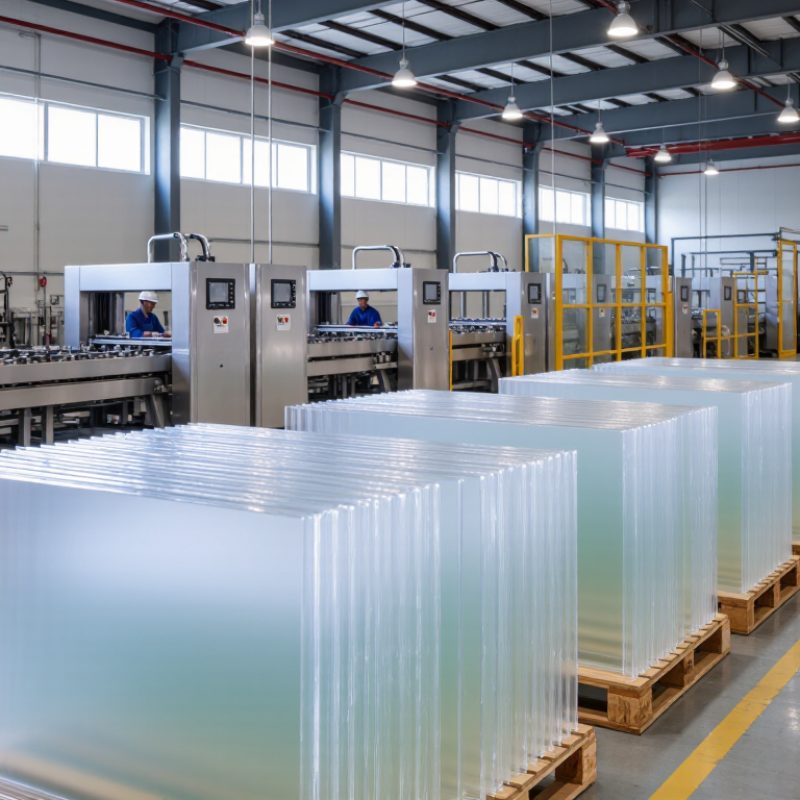
Polycarbonate sheets come in solid, twin-wall, multiwall, and corrugated forms. Solid sheets offer clear sightlines and strong impact resistance, making them useful for protective glazing and machine guards. Multiwall sheets trap air in narrow channels, helping reduce heat transfer in greenhouses, rooflights, and covered walkways. Corrugated sheets shed rain efficiently, but their ribbed profile can complicate clean detailing.
Typical clear polycarbonate has a density near 1.20 g/cm³ and can transmit about 85–90% of visible light, depending on thickness and surface treatment. These are practical reference values, not guarantees. ISO 11963:2019 sets requirements for polycarbonate sheets used in glazing, while actual performance should be checked against test data for the selected grade. UV-protective coatings can slow yellowing outdoors. Cut edges still need careful sealing.
Scale matters. PlasticsEurope’s Plastics – the Facts 2023 reports 400.3 million tonnes of plastics produced worldwide in 2022; that figure covers all plastics, not polycarbonate alone. Buyers should compare light transmission, impact strength, fire performance, and thermal expansion on matching test conditions. A thinner sheet may look economical. Not always. Poor support spacing can cause visible sagging, especially under snow or strong wind.
Polycarbonate Sheet Types: Typical Thickness Ranges and Common Uses
Typical sheet thickness ranges vary by product and application. The ranges below are indicative; confirm load requirements and local building codes when specifying a sheet.
Solid sheets are commonly used for glazing and machine guards; twinwall and multiwall sheets for lightweight roofing and greenhouse panels; corrugated sheets for canopy and roof coverings.
China’s Polycarbonate Sheet Manufacturing Landscape
China’s polycarbonate sheet sector spans solid panels, multiwall roofing sheets, and specialty grades for construction, signage, and equipment. Production commonly involves extrusion, followed by cutting, surface treatment, or protective-film application. Buyers may find broad choices in thickness and color, but similar-looking sheets can differ in impact strength, light transmission, and weathering performance. That distinction matters.
The wider plastics industry provides useful context, though it does not measure polycarbonate sheets specifically. The OECD’s Global Plastics Outlook reports that global plastics production reached 460 million tonnes in 2019, while only 9% of plastic waste was ultimately recycled. For buyers, this makes material traceability and documented recycled-content claims worth checking. Still, sustainability figures alone cannot prove a sheet’s service life. A weak point in many comparisons is the lack of consistent, independently tested product data.
Tips: Request test reports for impact strength, UV resistance, and light transmission. Confirm sheet thickness at several points, not just at the edge. Ask how samples were tested, and compare results using the same standard. A neat sample is useful, but it is not the whole story.
Profiles of 10 Leading Chinese Polycarbonate Sheet Manufacturers
China’s polycarbonate sheet sector serves roofing, glazing, greenhouses, signage, and industrial applications. PlasticsEurope’s Plastics – the Fast Facts 2023 reports 400.3 million tonnes of global plastics production in 2022, with China accounting for 32%. This broad figure is not specific to polycarbonate sheets, but it helps explain the scale of China’s plastics supply base. The ten profiles below describe capability types, not verified company records; without names, buyers should treat them as a comparison framework.
One profile focuses on solid sheets for clear partitions and machine guards. Another makes UV-protected roofing sheets, where coating consistency matters under harsh sunlight. A third targets multiwall greenhouse panels with insulating air channels. The fourth produces embossed sheets for privacy screens; the fifth offers cut-to-size panels for small projects. A sixth emphasizes recycled content, while a seventh serves applications needing flame-retardant grades. The eighth handles cold-bending construction panels, the ninth supplies colored sheets for signage, and the tenth pairs sheet production with fabrication. Details matter. Ask for current technical data sheets, sample panels, thickness tolerances, and test methods. A glossy sample alone proves little. Claims also need checking. Export experience can help, but it does not guarantee consistent batches. I would want to see how suppliers handle color variation and damaged edges, too.
Comparing Manufacturers by Products, Capacity, and Certifications
A useful comparison of polycarbonate sheet manufacturers starts with product fit, not headline capacity. Compare solid, multiwall, corrugated, and embossed sheets by thickness, width, UV protection, and optical clarity. PlasticsEurope’s Plastics—The Fast Facts 2023 reports 400.3 million tonnes of global plastics production in 2022. That figure covers all plastics, not sheet output, but shows why buyers should request product-specific capacity data rather than broad claims.
Capacity figures are often presented too neatly. Ask for annual output by sheet type, current lead times, minimum order quantities, and the number of operating lines. Then check whether stated capacity matches your required thickness and color. Certifications need the same scrutiny. ISO 9001 indicates a quality-management system, but does not certify every sheet’s performance. Request current certificates, test reports, and applicable product-standard documentation. A polished certificate alone is not enough.
Tips: Request samples from the same production line and compare thickness at several points. Confirm UV-side markings and packaging before shipment. One detail is easy to miss: a high-capacity factory may not prioritize small, custom orders. Conversely, a smaller supplier may lack backup equipment. Ask what happens when a line stops.
Buyer Checklist for Sourcing Polycarbonate Sheets from China
When comparing Chinese polycarbonate sheet suppliers, define the application before reviewing quotations. Will the sheets be used for roofing, glazing, or machine guards? Specify thickness, dimensions, color, surface finish, and whether UV protection is needed on one or both sides. Ask for the stated thickness tolerance and light-transmission data. Small details matter. A clear sheet and a diffused sheet can behave differently under the same lighting.
Request a sample matching the quoted grade, color, and finish, then inspect it in the intended setting. Check for scratches, haze, uneven edges, and protective film that lifts too easily. Ask for recent test reports and confirm that they apply to the exact material offered. If a fire rating or other performance requirement matters, verify the relevant evidence rather than relying on a catalogue claim. Ask for evidence. It is also useful to agree on inspection criteria before production, including how defects will be recorded and handled.
Confirm packing method, production lead time, shipping terms, and replacement procedures in writing. For long sheets, ask how they will be supported and protected from bending or abrasion during transport. A supplier may quote an attractive price while leaving these details unclear. That is not proof of poor quality, but it deserves follow-up. Even a careful checklist can miss a practical issue; buyers sometimes discover that their chosen thickness is awkward to install only after the sample arrives. Test it with the actual fittings when possible.
| No. | Buyer Evaluation Dimension | What to Check | Evidence to Request | Buyer Action | Priority |
|---|---|---|---|---|---|
| 1 | Product type and application fit | Confirm whether the quotation covers solid, multiwall, corrugated, or another sheet type, and whether its intended use is suitable for the project. | Product data sheet, cross-section drawing, intended-use guidance, and sample matching the quoted specification. | Describe the application, installation environment, and performance needs before requesting a quotation. | Essential |
| 2 | Dimensions and tolerances | Check nominal thickness, width, length, sheet structure, and the supplier’s stated dimensional tolerances. | Dimensioned specification sheet and written confirmation of tolerances for the ordered product. | Put dimensions and acceptable tolerances in the purchase order; do not rely on a product name alone. | Essential |
| 3 | Material and construction | Clarify the resin type and, for multiwall products, the wall structure and layer configuration. Ask whether recycled content is included if that matters to the project. | Technical data sheet, product construction details, and written material declaration where applicable. | Compare like-for-like specifications and identify any material or construction differences between offers. | High |
| 4 | UV and weathering performance | Confirm which side or sides have UV protection, how the protected surface is identified, and what outdoor-use claims are supported by test data. | UV/weathering test reports or technical documentation that identifies the tested product and test method. | Check that the documentation covers the quoted sheet and intended exposure; follow installation guidance for orientation. | High |
| 5 | Optical and thermal properties | Review relevant declared properties such as light transmission, haze, and thermal performance. Values can vary by thickness, color, and sheet structure. | Product-specific data sheet and, where required, test reports stating the test method and specimen details. | Compare the same property, test method, thickness, and color across quotations. | High |
| 6 | Mechanical performance | Check the properties relevant to the application, such as impact behavior, load requirements, and service-temperature information. | Technical data and test reports for the specified product; confirm whether results apply to the intended sheet configuration. | Ask a qualified project designer to verify structural suitability rather than treating a general datasheet value as a design approval. | High |
| 7 | Quality control and traceability | Ask how incoming materials, production, finished dimensions, and batches are checked and recorded. | Documented inspection plan, sample inspection records, batch identification method, and any applicable quality-system certificate. | Agree on inspection criteria, sampling, and handling of nonconforming goods before production starts. | High |
| 8 | Samples and pre-shipment inspection | Verify that the sample represents the product to be ordered and that inspection can assess appearance, dimensions, packaging, and agreed specifications. | Approved reference sample, inspection checklist, and inspection report when an inspection is arranged. | Record sample approval in writing and define who pays for inspection and how defects will be resolved. | High |
| 9 | Packaging and logistics | Confirm sheet protection, packing method, pallet or bundle details, loading plan, and shipping terms. Packaging needs depend on sheet size and route. | Packing specification, package photos or drawings, shipment dimensions and weight, and a written quotation stating the delivery term and named place. | Check that packaging protects edges and surfaces and that shipment details suit the destination’s handling and unloading arrangements. | High |
| 10 | Commercial terms and compliance | Review minimum order quantity, production lead time, payment milestones, warranty scope, and destination-market requirements. Applicable rules depend on the product and market. | Formal quotation, draft purchase terms, warranty conditions, and relevant compliance documents for the destination market. | Use a written contract that defines specification, quantity, delivery, acceptance criteria, remedies, and required documents. | Essential |
Related Posts
-
China Top Polycarbonate Sheets for Quality and Durability Why Choose Them?
-

What Are Polycarbonate Plastic Sheets?
-

Why Choose Polycarbonate Sheets for Your Next Project and Their Benefits
-

What is Polycarbonate Sheets and How Are They Used?
-
Why Choose Polycarbonate Panels for Your Project?
-
2026 Best Types of PC Sheets for Global Buyers