2026 Best Types of PC Sheets for Global Buyers

Choosing the right pc sheets in 2026 requires more than comparing prices and thicknesses. Global buyers must evaluate impact strength, light transmission, fire performance, weather resistance, thermal movement, and local installation conditions. A clear roof panel may look ideal in a catalogue. Under strong ultraviolet exposure, however, poor protection can cause yellowing, brittleness, or unexpected replacement costs.

Grand View Research estimates that the global polycarbonate market will continue expanding through 2030, supported by construction, transportation, electronics, and industrial applications. MarketsandMarkets also forecasts steady growth, although its figures differ because market definitions and product categories are not identical. That difference matters. Buyers should question impressive statistics before using them for procurement decisions.

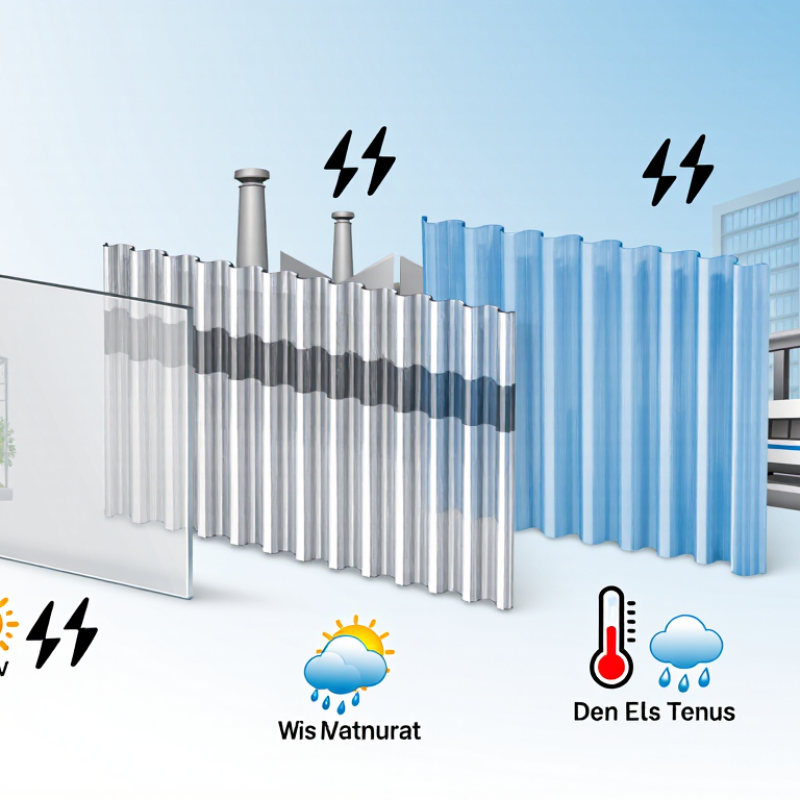
Dr. John Scheirs, a recognized polymer materials specialist, has written, “Material selection must begin with the service environment, not the material name.” This principle remains practical for pc sheets. A greenhouse in Spain needs different performance from a factory roof in Southeast Asia or a noise barrier in Northern Europe. The following outline compares solid, multiwall, corrugated, and coated pc sheets by structure, climate suitability, lifespan, fabrication, and compliance considerations. It also examines supplier documentation, including test standards, warranty terms, UV-layer specifications, and batch consistency.

Some choices are still imperfect. No sheet type suits every project. The cheapest option may reduce initial spending, but installation errors, thermal expansion, and cleaning damage can quietly increase the total cost. Global buyers should verify real samples, not rely on polished product images.

2026 Best Types of PC Sheets for Global Buyers

What PC Sheets Are and How Their Structure Affects Performance

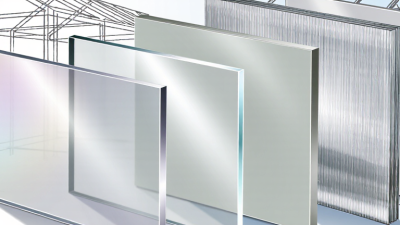
Polycarbonate (PC) sheets are engineered panels made from a strong, lightweight thermoplastic. Their performance depends on more than thickness. Internal geometry, surface treatment, and installation conditions matter just as much. A solid sheet has a dense, clear body. It offers high impact resistance and good visual clarity. However, it can transfer more heat than a multiwall design.

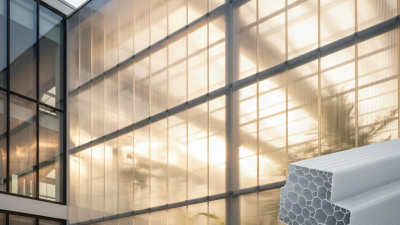
Multiwall PC sheets contain vertical ribs or honeycomb-like chambers. These air spaces improve insulation and reduce weight. More layers can increase thermal resistance, but they may also reduce transparency. Rib shape affects stiffness, drainage, and wind performance. Corrugated sheets use repeated waves for strength and simple roofing applications. They are practical, yet their curved profile can create uneven light and more difficult sealing.

Surface coatings change long-term behavior. A UV-protective layer helps reduce yellowing and brittleness under strong sunlight. Anti-condensation treatments may support greenhouse use. Always check which side faces outward. Reversing it can shorten service life.

In my experience, buyers often focus on sheet thickness first. That is understandable, but incomplete. A thinner multiwall panel may insulate better than a thicker solid panel.

Still, calculations should consider local wind, snow, temperature, span, and fixing methods. Color also matters. Clear panels admit more daylight, while tinted panels can reduce glare and solar heat. No structure performs perfectly in every climate. Careful specification remains essential.

Key PC Sheet Types: Solid, Multiwall, Corrugated, and Embossed

2026 Best Types of PC Sheets for Global Buyers

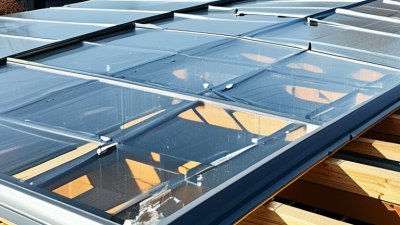
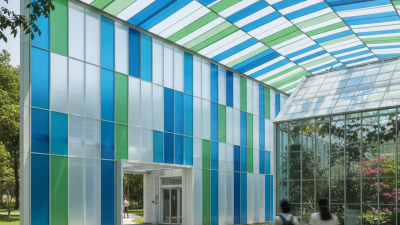
Solid, multiwall, corrugated, and embossed polycarbonate sheets serve different building needs. Solid sheets provide clear visibility, strong impact resistance, and a glass-like appearance. They suit safety glazing, partitions, and machine guards. Multiwall sheets use internal ribs to trap air. This structure improves thermal insulation while reducing weight. They work well for greenhouses, skylights, and warehouse roofs.

Corrugated sheets are lighter and easier to overlap on agricultural or industrial roofs. Their wave profile helps rainwater drain quickly. Embossed sheets scatter light and reduce glare, although their surface can collect dust. A 2024 MarketsandMarkets assessment valued the global polycarbonate market at about USD 2.9 billion in 2023 and projected roughly 7% annual growth through 2028. This figure covers more than sheets, so buyers should avoid treating it as a direct sheet-market value. Grand View Research also identifies construction and glazing as important demand areas.

Tips: Match sheet structure to the project first. Check thickness, UV protection, fire classification, light transmission, and wind-load data. For multiwall panels, inspect rib spacing and condensation control. For corrugated sheets, confirm overlap requirements before installation. Ask for tested impact and thermal-performance reports. Specifications can look impressive, but site conditions often expose weak assumptions. A clear sheet may still yellow or scratch if its coating and maintenance plan are unsuitable. unerquicklich

2026 Best Types of PC Sheets for Global Buyers

Key PC Sheet Types: Solid, Multiwall, Corrugated, and Embossed

The chart compares common commercial thickness ranges in millimetres. Solid sheets are widely used for glazing and impact protection; multiwall sheets provide lightweight thermal insulation; corrugated sheets are suited to roofing and agricultural covers; embossed sheets add surface texture for privacy, diffusion, or decorative applications. Actual ranges vary by supplier, profile, and project requirements.

How to Choose the Best PC Sheet for Each Application

Choosing a polycarbonate (PC) sheet starts with the application, not the price. Measure sunlight, wind, temperature, humidity, and cleaning exposure at the site. Solid sheets suit impact screens, partitions, and noise barriers. Multiwall sheets reduce heat transfer in roofs and façades. Corrugated profiles improve drainage, but design flexibility is limited. Grand View Research’s 2024 market assessment identifies construction as a leading polycarbonate sheet application. It also forecasts continued growth through 2030.

Thermal performance deserves equal attention. The International Energy Agency reports that buildings consume about 30% of global final energy. This makes U-value more than a marketing number. Compare declared U-values at identical thicknesses and test conditions. Multiwall geometry can outperform solid PC thermally, but light transmission may decrease. For greenhouse glazing, check haze, solar control, condensation, and yellowing resistance. For safety glazing, request impact, fire, and weathering evidence. ISO 4892-3 or equivalent testing can support outdoor durability claims. Never compare unverified laboratory results.

Installation details often decide service life. Allow thermal movement, use compatible gaskets, and seal exposed channels correctly. Polycarbonate expands noticeably during temperature changes. Plastics Europe reported 400.3 million tonnes of global plastics production in 2022. Responsible sourcing therefore deserves attention. Ask for recycled-content evidence, traceability, and end-of-life guidance. A sheet can look excellent and still fail at the joints. One-number decisions rarely survive real weather.

Global Quality Standards, Certifications, and Climate Considerations

For 2026 PC sheet purchasing, global buyers should verify standards, not only thickness or price. ISO 9001 supports controlled production, while ISO 14001 addresses environmental management. For building projects, request fire-test evidence under EN 13501-1 or the relevant local standard. ASTM E84 may apply in some markets, but test methods are not automatically interchangeable. UV resistance should be checked through ISO 4892-3 weathering data, with exposure duration clearly stated.

Climate risk is becoming harder to ignore. The World Meteorological Organization reported that 2024 was approximately 1.55°C above the 1850–1900 average. Hotter roofs demand stronger UV protection and better ventilation. The GlobalABC 2024 report states that buildings consumed about 32% of global energy and produced roughly 34% of global carbon emissions. PC sheets can reduce daylighting demand, but poor installation creates heat gain and condensation. One overlooked issue is thermal movement. With expansion near 0.065 mm per metre per °C, a 5-metre panel may move over 20 mm during a large temperature swing. Fixed fasteners can crack it.

Tips: Ask for batch traceability, accredited laboratory reports, UV-side markings, and local wind-load calculations. Check the whole roof system. Not just the sheet. Field inspections often find that drainage and sealing fail before the panel does. A certificate is useful, but it is not a guarantee. I would also question recycled-content claims unless percentages and testing methods are disclosed.

2026 Best Types of PC Sheets for Global Buyers - Global Quality Standards, Certifications, and Climate Considerations
PC Sheet Type Typical Thickness Typical Light Transmission Typical Thermal Performance Main Advantages Recommended Climate and Use Common Standards and Certification Routes Key Buyer Checks
Solid Flat PC Sheet 2–15 mm; thicker sheets are available for specialist glazing Approximately 80–90% for clear sheets, depending on thickness and surface finish Single-sheet U-value is commonly about 5.8–2.4 W/m²·K across the typical thickness range; actual performance depends on framing and installation High impact resistance, good optical clarity, cold-forming capability, and suitability for safety glazing and machine guards Suitable for high-wind, hail-prone, public-access, and security-sensitive areas when correctly designed and fixed EN 16240 may apply to solid flat polycarbonate sheets for internal or external walls, roofs, and ceilings. Optical testing may use ASTM D1003. UV-weathering evaluation may use ISO 4892-3 or ASTM G154. Fire classification may use EN 13501-1 or UL 94, depending on the application Confirm UV protection, impact classification, fire performance of the complete assembly, thickness tolerance, and allowable fixing span
Twin-Wall PC Sheet 4–10 mm Approximately 70–85% for clear products; lower for opal or solar-control grades Typical U-value is about 3.6 W/m²·K at 6 mm and about 2.8 W/m²·K at 10 mm Lightweight, economical, easy to cut, and more thermally efficient than single-layer glazing Good for moderate and cold climates, greenhouse walls, skylights, partitions, and lightweight roof systems EN 16153 may apply to light-transmitting flat multiwall polycarbonate sheets used in roofs, walls, and ceilings. Fire performance may be classified under EN 13501-1 or tested under UL 94 where relevant Check cell geometry, condensation drainage, UV-side marking, tape and profile compatibility, and snow-load tables
Multiwall PC Sheet 10–25 mm; thicker structures are available for high insulation requirements Approximately 45–80%, depending on wall structure, color, thickness, and coating Typical U-value is about 2.0 W/m²·K at 16 mm and about 1.4 W/m²·K at 25 mm; exact values must be measured or declared for the product Improved insulation, low structural weight, good stiffness-to-weight ratio, and reduced solar glare when tinted or opal Well suited to cold climates, energy-conscious buildings, large skylights, atria, agricultural structures, and warehouse façades EN 16153 is commonly relevant. Thermal transmittance may be declared using EN 673 or EN ISO 10077 methods. Fire classification may use EN 13501-1; national building approval may also be required Check U-value at the stated thickness, chamber design, thermal expansion allowance, edge sealing, wind load, snow load, and long-term yellowing resistance
Triple-Wall or X-Structure PC Sheet 16–32 mm Approximately 40–75%, depending on geometry and surface treatment Typical U-value is about 1.5–1.9 W/m²·K, depending on thickness and internal structure Higher rigidity and insulation than basic twin-wall products, with good daylight diffusion options Recommended for cold regions, high-altitude applications, insulated roofs, façades, and buildings with demanding energy targets EN 16153 may apply. Solar and thermal properties should be supported by declared test data. Fire classification may use EN 13501-1 or another locally accepted building-code method Verify connector design, panel end treatment, drainage direction, structural span, and compatibility with local fire regulations
Embossed or Textured PC Sheet 1.5–6 mm Approximately 55–85%, depending on embossing depth, color, and texture Thermal performance is similar to solid sheet of comparable thickness; a single 3 mm sheet typically has a U-value near 5 W/m²·K Diffuses light, reduces glare, hides minor scratches, and can provide improved visual privacy Useful in hot climates, privacy screens, interior partitions, decorative roofing, and daylighting where glare control is important Relevant evaluations can include ASTM D1003 for haze and luminous transmittance, ISO 4892-3 or ASTM G154 for weathering, and EN 13501-1 or UL 94 for fire performance where required Confirm haze level, color stability, cleanability, scratch resistance, outdoor UV treatment, and the orientation of the textured surface
Corrugated or Profiled PC Sheet 0.8–2.0 mm; profile depth varies by roofing system Approximately 65–90% for clear profiles; lower for tinted or opal profiles Usually lower insulation than multiwall panels; performance depends strongly on profile geometry and installation, with approximate U-values commonly above 3.5 W/m²·K Fast installation, low weight, good impact resistance, and easy integration with profiled metal roofing Suitable for warm and temperate climates, canopies, agricultural buildings, industrial rooflights, and façade inserts EN 1013 may be relevant to light-transmitting profiled plastic sheets for roofing, walls, and ceilings. Fire classification may use EN 13501-1 or local roofing fire tests. Wind and hail tests may be required by the project specification Check profile compatibility, overlap requirements, purlin spacing, washer design, thermal movement, wind uplift, and hail resistance
UV-Coated or Co-Extruded PC Sheet Available in solid, twin-wall, multiwall, and profiled constructions; commonly 2–25 mm Depends on the base construction; clear grades generally provide higher transmission than tinted or solar-control grades Thermal performance follows the base sheet design; the UV layer normally improves weatherability rather than insulation Improved resistance to ultraviolet radiation, yellowing, and surface degradation compared with unprotected PC Strongly recommended for tropical, high-UV, desert, coastal, and high-altitude environments; useful for long-life outdoor glazing Weathering may be evaluated using ISO 4892-3, ASTM G154, or equivalent accelerated-exposure methods. Exact service-life claims should be supported by product-specific testing and warranty documentation Identify the UV-protected side, confirm coating or co-extrusion thickness, review accelerated-weathering results, and avoid abrasive cleaners that can damage the surface
Solar-Control or IR-Reflective PC Sheet Typically 2–16 mm, available as solid or multiwall constructions Common visible light transmission range: approximately 25–75%; solar heat gain varies by coating, tint, and structure U-value follows the base construction; solar-control performance is better represented by total solar energy transmittance or g-value Reduces solar heat gain, glare, and cooling demand while retaining natural daylight Best for hot, sunny, tropical, subtropical, and desert climates; especially useful for west-facing façades and large rooflights Solar and optical properties may be tested using EN 410, ISO 9050, or ASTM E903. Fire classification may use EN 13501-1 or locally recognized methods Request visible transmittance, solar factor or SHGC, reflectance, color stability, surface temperature limits, and compatibility with sealants and gaskets
Abrasion- or Hard-Coated PC Sheet 2–12 mm Approximately 75–90% for clear grades, depending on coating and thickness Thermal performance is comparable to an equivalent solid sheet; the hard coat mainly improves surface durability Better resistance to scratching, cleaning chemicals, and repeated handling than standard uncoated PC Suitable for transport glazing, public areas, machine enclosures, partitions, and locations requiring frequent cleaning Surface abrasion may be assessed using ASTM D1044 or ISO 9352. Optical properties may use ASTM D1003. Fire and weathering performance must be verified for the specific coated construction Check abrasion test method, coating adhesion, chemical resistance, minimum bend radius, repairability, and whether cutting exposes an unprotected edge
Fire-Performance PC Sheet Commonly 2–16 mm, depending on construction and required classification Varies by formulation, additives, thickness, and color; fire additives may reduce optical transmission Thermal performance follows the sheet structure and thickness; fire performance does not indicate insulation performance Designed for projects with elevated fire-safety requirements, subject to product-specific testing Appropriate for transport facilities, public buildings, industrial interiors, and regulated construction projects when approved for the intended assembly Typical routes include EN 13501-1 for European reaction-to-fire classification, UL 94 for small-scale plastic flammability classification, ASTM E84 for surface-burning characteristics, and local building-code tests Never rely on resin-level or small-sample data alone; request reports for the exact thickness, color, coating, support system, and installation orientation
Important: The performance ranges above are typical market values for orientation only. Actual light transmission, U-value, solar factor, impact resistance, fire classification, weathering life, and load capacity vary by thickness, color, coating, panel geometry, support spacing, installation method, and test standard.
Global purchasing checklist: Request a technical data sheet, certificate or test report for the exact product, UV-side identification, dimensional tolerances, thermal expansion data, wind and snow-load calculations, fire classification, weathering evidence, and compliance documentation required by the destination country. Certifications are product- and application-specific and should not be assumed solely from the material name “polycarbonate.”

A Practical Checklist for Comparing PC Sheet Suppliers Worldwide

Choosing the best PC sheet depends on the application, not only on price. Solid sheets suit impact-resistant glazing and machine guards. Multiwall sheets reduce weight and improve insulation for roofing. Corrugated sheets fit temporary covers, but their appearance may age faster. Coated sheets can improve weather resistance, although coatings need verification.

A practical supplier checklist should examine resin grade, thickness tolerance, light transmission, impact results, and UV performance. Request test reports linked to ISO or ASTM methods. Check whether the report covers the exact production batch.

PlasticsEurope’s Plastics—The Fast Facts 2024 reports 400.3 million tonnes of global plastics production in 2022. This scale makes traceability important, especially for international orders.

Ask suppliers about recycled content, packaging, and end-of-life handling. The OECD Global Plastics Outlook reports that only 9% of plastic waste was recycled in 2019. Sustainability claims therefore need evidence, not attractive wording.

Tips: Compare three samples under daylight and cold conditions. Measure thickness at several points. Ask for warranty terms, replacement procedures, and shipping damage records. Confirm fire classification for the destination market. A low quotation may hide weaker UV protection or unstable dimensions. I would not trust a perfect datasheet without independent testing. Some suppliers communicate quickly, yet answer technical questions vaguely. That is a warning sign. Also review mold marks, edge quality, protective film adhesion, and lead-time history before approving volume production.