7 Best Polycarbonate Clear Plastic Sheets for Buyers

A clear panel can look flawless on a sample and still disappoint on a roof, greenhouse, or machine guard. The difference often comes down to thickness, UV protection, coating, and installation conditions. This guide compares seven polycarbonate clear plastic sheet options through practical buyer criteria, not appearance alone.

The market is broad. PlasticsEurope’s Plastics—The Fast Facts 2024 reports 413.8 million tonnes of plastics production worldwide in 2023. That figure covers many plastics, not polycarbonate sheets specifically. It offers useful industry context, but it cannot tell buyers which sheet will perform best for a particular project. Technical data matters more. Check light transmission, impact performance, operating temperature, and whether UV protection is built into one or both sides. Confirm measurements against the manufacturer’s current datasheet.

Small details matter. A thin, clear sheet may suit an indoor display, while an exposed outdoor panel may need a UV-protected grade and compatible fixings. Verify warranty terms and fabrication guidance before ordering. Ask how the sheet handles drilling, cutting, and thermal expansion. Not every sheet fits. This comparison highlights strengths and trade-offs across common product types, while recognizing that specifications vary by brand and thickness. Use it as a shortlist, then confirm the exact grade with the supplier.
7 Best Polycarbonate Clear Plastic Sheets for Buyers

Understanding Clear Polycarbonate Sheets and Their Key Properties

Clear polycarbonate sheets combine transparency with far greater impact resistance than ordinary glass. The material is light, too. MatWeb’s generic polycarbonate property data lists a density near 1.20 g/cm³ and a tensile modulus around 2.3 GPa. AZoM’s engineering material data gives typical tensile strength values of roughly 55–75 MPa. These are reference figures, not promises for every sheet.

Look closely at the specification. Thickness, processing, surface finish, and UV protection can change a sheet’s performance. Clear grades often transmit about 85–90% of visible light, but check the exact product data and test conditions. A panel beside a sunlit window may gradually yellow without suitable UV protection. It also expands more with heat than glass; AZoM lists a typical thermal expansion coefficient near 65 μm/m·°C. That matters when fixing large panels. Leave room for movement.

Test methods matter. ASTM D638 measures tensile properties, while ASTM D256 evaluates notched impact resistance; results from different methods are not directly interchangeable. Numbers alone can mislead. For a real project, compare the sheet’s documented values with its thickness, support spacing, and exposure conditions. A clear panel can look sturdy on a workbench, yet flex noticeably across a wide opening.

How to Choose a Sheet for Your Project

Start with the job. A greenhouse roof, machine guard, and indoor display panel need different sheet properties. Write down the panel’s size, support spacing, exposure to weather, and likely impact before comparing options. A thin sheet may look clear on a sample but flex noticeably across a wide opening. That matters.

Thickness is only part of the choice. Check the manufacturer’s load or span guidance for your sheet size, and allow for polycarbonate’s expansion as temperatures change. For outdoor use, confirm whether UV protection is present and which side faces the sun. Look for clear product documentation, not just a claim on a sales page. Measure twice. A small sizing error can leave a panel rattling in its frame.

Consider how you will cut and mount the sheet, too. Fine-tooth blades, clean support, and suitable fasteners help reduce chipped edges and stress around holes. Keep the protective film on during fabrication, but remove it before prolonged sun exposure if the instructions require it. A common buying mistake is choosing the clearest or thickest option without checking the frame. I would verify the support spacing first; it is easy to overlook, and changing it later can be awkward.

7 Polycarbonate Sheet Thicknesses: Approximate Weight per Square Meter

Thickness is one practical factor when choosing a clear polycarbonate sheet: thinner sheets are lighter and easier to handle, while thicker sheets are generally better suited to applications requiring greater rigidity. The weights shown are estimates calculated using a typical polycarbonate density of about 1.2 g/cm³; actual product weights vary. Check the sheet supplier’s specifications and your project’s support and load requirements before buying.

Seven Polycarbonate Clear Plastic Sheets for Buyers

7 Best Polycarbonate Clear Plastic Sheets for Buyers

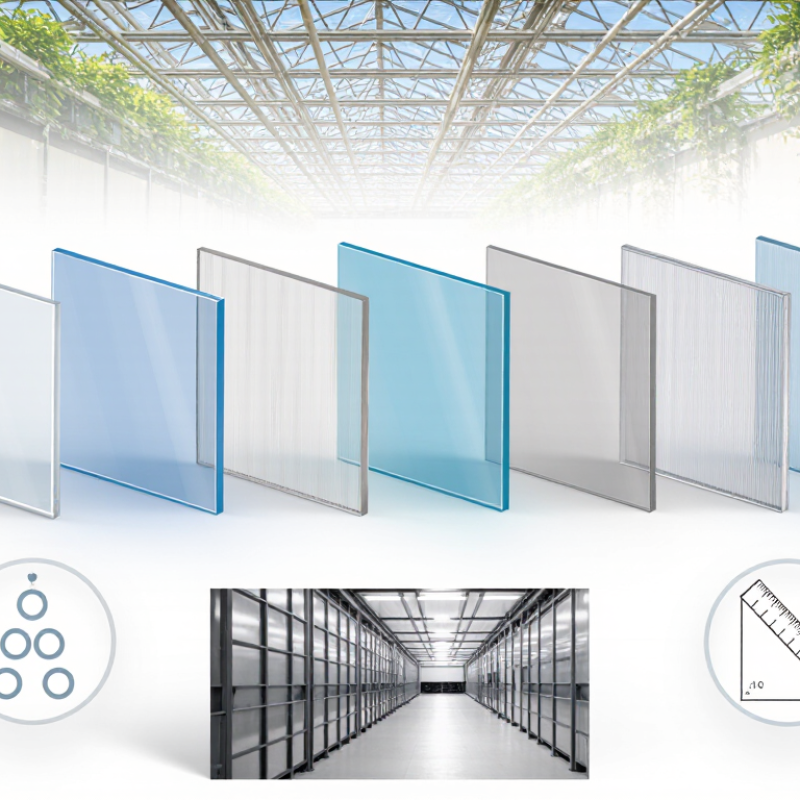
Seven options suit different jobs: standard solid sheet for guards, UV-protected sheet for outdoor panels, and abrasion-resistant sheet for frequent handling. Optical-grade sheet suits viewing windows. Flame-retardant grades may fit equipment enclosures. Tinted clear sheet reduces glare, while twin-wall sheet offers a lighter panel for roofs. One easy mistake is treating “clear” as a performance grade. It is not. Check the product data sheet for light transmission, thickness, coating, and intended use.

Tips: Confirm which side carries the UV coating. Ask for a sample, then inspect it under the lighting used at the installation site. Measure twice. Allow for thermal movement and protect cut edges during fitting.

Grand View Research estimated the global polycarbonate market at USD 26.36 billion in 2023. That figure covers polycarbonate materials broadly, not clear sheets alone, so use it as market context—not a sheet-sales forecast. For a reliable comparison, request documented test results and confirm the sheet’s grade, dimensions, and warranty conditions. A low price can hide a mismatch. I would still compare samples before ordering a large panel.

7 Best Polycarbonate Clear Plastic Sheets for Buyers - Seven Polycarbonate Clear Plastic Sheets for Buyers
Sheet Type Typical Construction Common Thicknesses Typical Visible Light Transmission Best Suited For Buyer Considerations
Clear solid sheet with one-side UV protection Single-layer, transparent polycarbonate with a UV-protective surface on one side About 1–12 mm Approximately 88–90% for clear grades; varies with thickness Outdoor glazing, signs, machine guards, and protective panels Install the protected face toward the sun. Confirm which side is UV-protected before removing protective film.
Clear solid sheet with two-side UV protection Single-layer, transparent sheet with UV protection on both faces About 2–12 mm Approximately 88–90% for clear grades; varies with thickness Outdoor panels that may be installed either way or exposed on both sides Offers more flexibility in orientation; check the product specification for its intended outdoor service and warranty conditions.
Clear solid sheet without a UV-protective layer Single-layer, transparent polycarbonate without a specified UV-resistant surface coating About 0.75–12 mm Approximately 88–90% for clear grades; varies with thickness Indoor glazing, partitions, displays, and general-purpose fabrication Usually a practical indoor option. Prolonged outdoor exposure can cause yellowing or loss of performance; verify UV suitability for exterior use.
Clear twin-wall sheet Two outer walls connected by internal ribs, forming parallel air channels Commonly about 4–10 mm Often approximately 75–85%, depending on thickness and structure Greenhouses, patio covers, and lightweight daylighting panels Channels reduce weight and can improve insulation compared with a solid sheet. Seal and orient channel ends as directed to limit moisture and debris entry.
Clear triple-wall sheet Three-wall multiwall construction with additional internal air spaces Commonly about 8–16 mm Often approximately 65–80%, depending on thickness and structure Roofing and glazing projects where added insulation is useful Typically heavier and less light-transmitting than thinner multiwall panels. Check support spacing and compatible closure details.
Clear corrugated sheet Profiled sheet with repeating ridges; commonly made as a solid or structured panel Profile- and product-dependent; often about 0.8–2 mm for thin solid profiles Product-dependent; clear versions can transmit a high proportion of visible light Canopies, covered walkways, sheds, and compatible corrugated roof systems Match the profile and fixing method to the supporting structure. Allow for thermal movement and use compatible fasteners and sealing washers.
Clear hard-coated solid sheet Solid polycarbonate with a surface coating designed to improve abrasion resistance Commonly about 2–6 mm; availability varies Often approximately 85–90% for clear grades; varies by coating and thickness Protective glazing, equipment covers, and applications requiring improved surface durability Hard coating can improve scratch resistance but does not make the sheet scratch-proof. Confirm chemical compatibility and fabrication limits.
Comparison note: Thickness availability and visible light transmission vary by product, color, coating, and test method. Values shown are general reference ranges, not guaranteed specifications. Confirm the technical data sheet, UV-protection details, load requirements, and installation guidance before purchasing.

Comparing Thickness, Clarity, Durability, and Cost

7 Best Polycarbonate Clear Plastic Sheets for Buyers

Thickness changes how a sheet feels and performs. Thin panels suit light-duty covers, while thicker solid sheets resist flexing better across wider openings. Twin-wall sheets are lighter and can add insulation, though their channels soften the view. Measure the span before comparing prices. A few extra millimeters can matter.

Clarity depends on surface finish, protective film, and sheet structure. For a crisp view through a solid panel, inspect it under daylight and check for haze or waviness. UV-protected sheets are useful outdoors because sunlight can yellow unprotected material over time. Hard-coated options can resist everyday scratching, but they usually cost more. No sheet stays pristine forever.

Consider seven practical choices: thin solid, medium solid, thick solid, UV-protected solid, hard-coated solid, twin-wall, and multiwall sheets. Each fits a different balance of visibility, weight, and durability. Compare the full panel cost, not just the price per sheet; cutting waste and mounting hardware add up. Edges need care. I would not assume the thickest option is automatically best. A shaded patio cover and a clear machine guard have different demands, and the cheapest sheet may become an expensive replacement.

Matching a Sheet to Your Application and Installation Needs

Choosing a clear polycarbonate sheet starts with the job, not the price. For a greenhouse panel, check whether the sheet has UV protection on the exposed side; sunlight can yellow unprotected material over time. A machine guard may need greater thickness and secure edge support, while a lightweight display cover may not. Thicker is not always better. It can add weight and make cutting or bending harder.

Installation matters just as much. Polycarbonate expands and contracts with temperature, so holes should allow movement rather than clamp the panel tightly. Leave clearance around fasteners, and use washers that spread pressure without crushing the sheet. For a roof or outdoor screen, plan the slope and drainage before cutting. Trapped water and dust can dull a clear surface. Small details count.

Check the manufacturer’s guidance for minimum bend radius, compatible sealants, and cleaning methods. Abrasive pads can scratch the face, even when the sheet looks tough. I have seen careful measuring undone by one hurried cut; it is worth testing the blade and finish on an offcut. Also consider how the panel will be replaced. A sheet that fits neatly today may be awkward to remove when framed permanently.