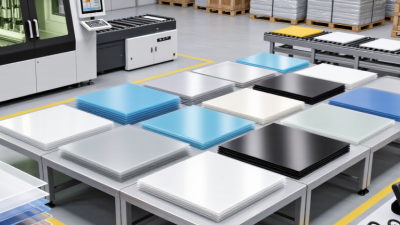
What Are the Top Types of Plastic Sheets?
Choosing the right plastic sheets can feel simple until temperature, moisture, impact, and appearance affect the final result. A clear panel beside a workshop window may need different performance from a thick sheet used for machine guards. Material names alone do not tell the whole story.
This guide examines common options, including acrylic, polycarbonate, PVC, HDPE, PETG, and ABS sheets. Acrylic offers strong clarity and a polished appearance. Polycarbonate usually handles impact better. PVC can suit practical fabrication and chemical-resistant applications. HDPE is valued for toughness and low moisture absorption. PETG bends easily and often supports clean forming. ABS provides a useful balance for durable components and enclosures.
Real projects teach important lessons. A sheet can look ideal on a product page, then warp near heat or scratch during installation. Small details matter. Check thickness, operating temperature, surface finish, UV exposure, and fabrication methods before ordering. Manufacturer datasheets and technical testing provide more dependable guidance than color or price alone. Local suppliers may also provide samples, which can reveal unexpected flexibility or surface marks.
There is no universal best material. That is worth remembering. Budget, safety requirements, appearance, and service conditions must work together. Some descriptions remain confusing, especially when suppliers use broad terms like “industrial grade.” Comparing verified specifications is safer than trusting a short label. This overview offers a practical starting point, but demanding applications should receive review from a qualified materials professional. Even experienced buyers can miss one detail.
Main Categories of Plastic Sheets
What Are the Top Types of Plastic Sheets?
Main Categories of Plastic Sheets
Plastic sheets fall into several practical categories, based on material, structure, and performance. Solid thermoplastic sheets include polyethylene, polypropylene, polyvinyl chloride, acrylic, polycarbonate, and polyethylene terephthalate. They soften when heated and can often be cut, bent, welded, or thermoformed. In workshop applications, I check chemical exposure, impact risk, temperature, and thickness before choosing a sheet. Appearance alone is not enough.
Foamed sheets form another major category. Their cellular cores reduce weight and improve insulation, but they may dent more easily under concentrated loads. Corrugated and multiwall sheets use internal ribs or channels for stiffness. They suit temporary partitions, protective covers, and lightweight enclosures. Thermoset sheets, including phenolic and glass-reinforced laminates, resist heat and dimensional change. They do not remelt easily. That difference matters during fabrication.
Industry data supports a careful approach. PlasticsEurope reported global plastics production of about 400.3 million tonnes in 2022. The OECD’s Global Plastics Outlook estimated 353 million tonnes of plastic waste in 2019, with only 9% recycled. Therefore, recyclability and service life deserve attention alongside price. A recyclable sheet may still perform poorly in heat or sunlight. The categories also overlap, which makes simple product charts slightly misleading. A better selection records the working environment, expected load, joining method, and end-of-life route. Sometimes, the “best” sheet is only the least unsuitable option.
What Are the Top Types of Plastic Sheets?
Plastic sheets are commonly categorized by their polymer type. The chart compares representative densities for widely used sheet materials; actual values vary by grade, additives, and manufacturing process.
Density: Lower-density materials are generally lighter, while higher-density materials typically provide greater mass per unit volume.
Material Properties That Distinguish Plastic Sheets
Plastic sheets differ less by appearance than by measurable material properties. Acrylic offers excellent light transmission and a clean, glass-like surface. It suits display panels, signs, and indoor partitions. Polycarbonate is tougher and resists impact better, making it useful for machine guards and protective covers. However, it can scratch more easily without a suitable surface treatment.
HDPE sheets resist moisture, chemicals, and repeated outdoor handling. Their slightly flexible surface works well for cutting boards, tank liners, and fabricated parts. PVC sheets provide strong chemical resistance and convenient fabrication, but temperature limits must be checked carefully. ABS is valued for toughness and easy machining. PETG combines clarity with good forming performance. It is often selected for shaped guards and product housings.
Tips: Match the sheet to the actual environment, not only the project drawing. Check operating temperature, load, UV exposure, chemical contact, thickness, and fastening method. In workshop testing, a small sample can reveal warping, cracking, or poor bonding before full production. Do not assume a thicker sheet is always better. Weight, cost, and cutting difficulty may increase. I have seen clear plastic look perfect at installation, then develop stress marks around drilled holes. That detail is easy to miss. A qualified fabricator should review tolerances and support spacing before cutting.
What Are the Top Types of Plastic Sheets? - Material Properties That Distinguish Plastic Sheets
| Plastic Sheet Type | Typical Density (g/cm³) |
Typical Tensile Strength (MPa) |
Continuous Service Temperature (°C) |
Impact Resistance | Optical Characteristics | Chemical Resistance | Typical Applications |
|---|---|---|---|---|---|---|---|
| High-Density Polyethylene (HDPE) | 0.94–0.97 | 20–37 | −50 to 80 | High; good resistance to impact and abrasion | Opaque or translucent; naturally waxy appearance | Excellent resistance to water, acids, alkalis, and many solvents | Chemical tanks, cutting boards, liners, fabrication panels, and outdoor components |
| Low-Density Polyethylene (LDPE) | 0.91–0.94 | 8–25 | −60 to 65 | Very high flexibility and impact resistance | Translucent to opaque; limited clarity | Good resistance to dilute acids, alkalis, and moisture | Flexible liners, protective covers, packaging sheets, and moisture barriers |
| Polypropylene (PP) | 0.90–0.91 | 25–40 | 0 to 100 | Good at room temperature; reduced at low temperatures | Translucent or opaque | Excellent resistance to many acids, alkalis, and industrial chemicals | Laboratory equipment, tanks, ducting, food-contact components, and fabrication liners |
| Polyvinyl Chloride (PVC) | 1.30–1.45 | 35–55 | −10 to 60 | Moderate; rigid grades can be brittle under impact | Opaque, translucent, or clear depending on formulation | Very good resistance to acids, alkalis, salts, and moisture | Tanks, piping, electrical enclosures, wall cladding, and signage |
| Acrylic (PMMA) | 1.17–1.20 | 60–75 | −30 to 80 | Moderate; more brittle than polycarbonate | Excellent optical clarity; light transmission commonly about 92% | Good resistance to weathering and dilute chemicals; sensitive to some solvents | Display panels, glazing, light diffusers, aquariums, and architectural features |
| Polycarbonate (PC) | 1.18–1.22 | 55–75 | −40 to 115 | Excellent; substantially tougher than acrylic | Clear grades can transmit approximately 86–90% of visible light | Good resistance to dilute acids and oils; vulnerable to some solvents and alkalis | Safety glazing, machine guards, protective barriers, roofing, and impact-resistant covers |
| Polyethylene Terephthalate Glycol (PETG) | 1.27–1.30 | 45–60 | −40 to 70 | High; less brittle than many clear plastics | High clarity and good surface gloss | Good resistance to water and many dilute chemicals; solvent compatibility varies | Thermoformed trays, point-of-sale displays, guards, packaging, and fabricated covers |
| Acrylonitrile Butadiene Styrene (ABS) | 1.03–1.07 | 35–50 | −20 to 80 | High; good toughness and dimensional stability | Opaque; available in textured or smooth finishes | Good resistance to aqueous solutions; limited resistance to strong solvents | Machine housings, equipment panels, vehicle interior parts, and prototypes |
| Nylon (Polyamide, PA) | 1.12–1.15 | 50–85 | −40 to 100 | High; strong and resistant to repeated mechanical loading | Opaque or translucent; typically natural white or dark-colored | Good resistance to oils and many hydrocarbons; absorbs moisture | Wear pads, gears, rollers, bearings, bushings, and mechanical components |
Note: Values are typical room-temperature ranges for unfilled sheet materials. Actual properties vary with grade, additives, reinforcement, processing method, thickness, and test standard.
Common Applications for Each Plastic Sheet Type
Plastic sheets serve different jobs because their strength, clarity, and chemical resistance vary widely.
Acrylic sheets are lightweight and highly transparent, making them useful for display panels, indoor partitions, and protective covers.
Polycarbonate sheets withstand strong impacts, so workshops often use them for machine guards, safety glazing, and greenhouse roofing.
High-density polyethylene sheets resist moisture and many chemicals. They suit cutting boards, tank linings, and outdoor storage components.
Polyvinyl chloride sheets are practical for ducting, wall protection, and industrial enclosures. However, heat exposure can limit their performance.
Application choices should follow measured conditions, not appearance alone.
The 2024 PlasticsEurope report places global plastics production at about 430 million tonnes in 2023. That scale reflects broad demand, but it also increases pressure to select durable materials and reduce replacement waste.
The OECD has reported that only about 9% of plastic waste was recycled globally in 2019. This figure should make buyers question short service life and difficult recycling routes.
A sheet may perform well yet still create disposal problems. That tradeoff is easy to miss.
Tips:
Check temperature, load, moisture, and chemical contact before ordering. Request technical data, including impact strength and working temperature. Measure twice. Do not assume thicker means better. For outdoor use, confirm ultraviolet resistance and fastener compatibility. In real projects, installation errors can weaken even excellent plastic sheets. A small prototype can reveal warping, cracking, or glare before full production. Industry standards such as ASTM and ISO methods can support reliable comparisons, but test results still need context.
Key Factors in Selecting a Plastic Sheet
What Are the Top Types of Plastic Sheets?
Choosing a plastic sheet starts with the job, not the material name. In a workshop, I check impact, temperature, moisture, and expected load before comparing options. Polycarbonate suits areas needing strong impact resistance. Acrylic offers clear light transmission and a smooth appearance. PVC sheets can resist moisture and many chemicals, while polyethylene handles wear and low-friction contact well. These categories overlap, so a familiar label cannot replace a real specification.
Thickness matters, but it is not the only factor. A thin sheet may flex, crack around drilled holes, or sag across a wide frame. Ask for the span, support spacing, and fastening method. Review the working temperature, ultraviolet exposure, and contact chemicals. A sheet near a hot machine needs different performance from one used indoors. Check whether it can be cut, bent, welded, or thermoformed without losing strength. Small test pieces reveal problems early.
I once selected a sheet by appearance alone. It looked excellent, but its surface scratched during installation. That shortcut was a mistake. Now I request technical data, tolerance information, and safety documentation from the supplier. I also compare sample pieces under actual lighting and handling conditions. Be careful with vague claims such as “chemical resistant.” Resistance depends on concentration, time, temperature, and stress. The best choice may cost more initially, yet reduce replacement work. Still, I would recheck every assumption before ordering a large quantity.
Comparison of Performance, Cost, and Durability
Plastic sheets differ sharply in performance, cost, and service life. Polyvinyl chloride sheets are economical and resist moisture, acids, and many cleaning chemicals. They suit wall cladding and duct covers. However, standard grades can become brittle in cold conditions. Acrylic sheets provide better optical clarity and usually cost less than polycarbonate. Polycarbonate offers far higher impact resistance, making it suitable for machine guards and safety glazing. The trade-off is a higher purchase price and easier surface scratching.
High-density polyethylene sheets are lightweight, moisture-resistant, and easy to machine. Their low surface energy can make bonding difficult. Acrylonitrile butadiene styrene sheets balance stiffness, appearance, and moderate cost, but outdoor exposure may require protection. Grand View Research’s 2024 plastic sheets market analysis projects steady growth through 2030, driven partly by construction and industrial demand. That growth does not mean every sheet is a durable choice.
Lifecycle cost matters more than the invoice. A 2023 PlasticsEurope report recorded 400.3 million tonnes of global plastics production in 2022, highlighting the scale of material selection and waste management. For transparent panels, polycarbonate may last longer under impact, while acrylic can remain clearer in some indoor applications. ASTM D256 impact testing and ASTM D638 tensile testing provide useful comparisons, but laboratory results can mislead. Real service includes sunlight, fasteners, heat, scratches, and poor installation. I have seen low-cost sheets fail early because movement was ignored. The cheapest option is often only cheap at purchase.
Related Posts
-
Top Solid Plastic Sheets Manufacturers for Global Buyers
-
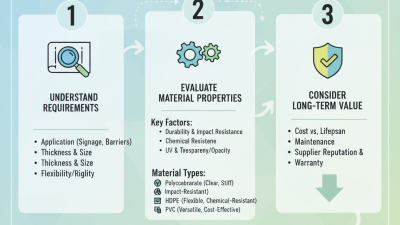
2026 How to Choose Solid Plastic Sheets for Your Next Project?
-
Top 10 Clear Plastic Sheets for Your Business Needs?
-
How to Source Solid Plastic Sheets in 2026?
-

2026 How to Use Transparent Plastic Sheets in Your Projects?
-

Why Choose Plexi Sheets for Your Next Project?