2026 Best Opaque Plastic Sheeting for Global Buyers?
Opaque plastic sheeting looks simple on a roll, but its performance depends on more than color. Buyers must compare opacity, thickness, tear resistance, UV stability, and the conditions where the sheet will be used. A warehouse roof, greenhouse sidewall, and construction cover face different demands. One specification will not suit every job.
The wider plastics market also makes responsible sourcing important. The OECD’s Global Plastics Outlook (2022) estimates that global plastic production reached 460 million tonnes in 2019. It reports 353 million tonnes of plastic waste that year, with only 9% ultimately recycled. These figures cover plastics broadly, not opaque sheeting alone. Still, they make recycled-content claims, product lifespan, and end-of-life instructions worth checking. Plastics materials scientist Dr. Chris DeArmitt has summarized the broader issue: “Plastic is not the problem; plastic waste is.” Buyers should treat that as context, not as a substitute for product testing.
This guide compares opaque plastic sheeting for global buyers using practical questions: Does a sample block light evenly? Does it split around a grommet? Are thickness and roll dimensions clearly stated? Ask suppliers for current technical data sheets and test evidence, especially for outdoor or repeated-use applications. A low price may look attractive beside a loading dock. It may also hide a costly mismatch. Specifications help, but they do not tell the whole story. Sample the material under real conditions before placing a large order. That extra check can prevent avoidable waste.
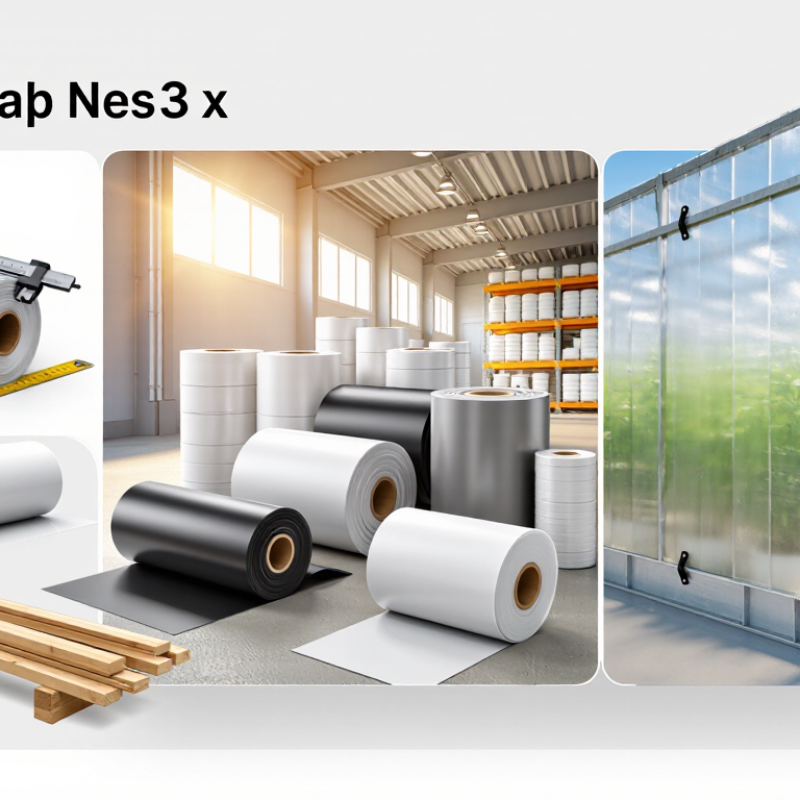
What Opaque Plastic Sheeting Is and How It Blocks Light
Opaque plastic sheeting is a flexible film designed to prevent visible light from passing through. Its opacity often comes from pigments dispersed through the polymer or from layered construction that absorbs and scatters incoming light. In a warehouse, greenhouse, or temporary work area, a lamp behind the sheet can reveal weak spots quickly. Some light may still glow through thin areas.
The film does not block light through thickness alone. Pigment concentration, even distribution, surface damage, and manufacturing consistency all affect performance. A thick sheet with pale streaks may leak more light than a thinner, uniformly colored one. Check a sample against a bright window, then inspect folds and pinholes. Seams need overlap. Light finds gaps.
Opaque describes visible-light transmission, not every form of radiation or heat transfer. A black sheet may absorb sunlight and become hot, while a light-colored opaque sheet can behave differently. UV resistance, tear strength, and temperature limits require separate specifications; opacity alone cannot confirm them. The word “opaque” is not a precise performance rating unless test data is available. It is easy to assume darkness means full blackout, but real installations rarely stay perfect.
| Material or construction | How it blocks light | Typical characteristics | Common applications | Key buying checks |
|---|---|---|---|---|
| Black polyethylene (PE) film | Black pigment absorbs and reduces light passing through the film. Actual performance depends on pigment loading, film thickness, and formulation. | Lightweight, flexible, and available in a wide range of gauges. Often used where a dark, low-cost barrier is needed. | Temporary covers, construction protection, ground covers, and light-exclusion applications. | Request measured light-transmission data for the specified thickness. Confirm tear strength, gauge tolerance, and whether UV stabilization is required. |
| White/black coextruded PE film | The black inner layer limits light transmission; the white outer layer reflects more sunlight than a black surface. | Combines an opaque barrier with a reflective exterior. It is commonly supplied as flexible film, but layer structure and performance vary by product. | Greenhouse and agricultural covers, temporary light control, and applications where lower solar heat absorption at the surface is useful. | Check which side faces outward, total thickness, seam compatibility, UV rating, and light-transmission results. Reflective color alone does not prove opacity. |
| Opaque PVC film or sheet | Opaque pigments dispersed through the PVC reduce transmitted light; opacity is a formulation property rather than a guarantee of PVC alone. | Can be flexible or semi-rigid. Flexibility, cold-weather behavior, and chemical compatibility depend on the formulation and any plasticizers. | Industrial curtains, covers, partitions, protective panels, and fabricated products requiring an opaque sheet. | Check flexibility at the intended temperature, chemical exposure, fire requirements, and relevant local product regulations. |
| Opaque HDPE sheet or film | Pigments or other opaque additives reduce light transmission through the material. A natural or lightly colored grade may not provide full light blocking. | Generally stiffer than thin PE film; thicker HDPE products are used where durability and dimensional stability matter. | Protective liners, fabricated panels, outdoor covers, and industrial containment applications, depending on grade and thickness. | Verify opacity at the actual thickness, impact and chemical-resistance needs, joining method, and outdoor UV suitability. |
| Opaque polypropylene (PP) sheet | Colorants or opaque additives reduce the amount of light transmitted through the sheet. | Available in rigid and flexible forms. Temperature performance and stiffness vary by PP grade and product construction. | Reusable covers, packaging components, dividers, and fabricated industrial parts. | Confirm grade, thickness, service temperature, joining method, and measured light transmission; do not infer opacity from color alone. |
Related Posts
-
Top Types of Opaque Plastic Sheeting for Global Buyers
-

How to Use Opaque Plastic Sheeting for Effective Light Blockage and Privacy
-

2025 How to Choose Clear Plastic Sheets for Maximum Durability and Versatility
-

Top Benefits of Using Coloured Plastic Sheets in 2025 for Your Projects
-

2026 Best Opaque Plastic Sheeting Options for Your Projects?
-

2026 Best Plastic Roll Options for Global Buyers?