10 Essential Tips for Choosing the Best Plastic Board for Your Projects?
Choosing the right plastic board for your projects can be challenging. With so many options available, it's essential to understand what makes each type unique. Plastic boards come in various sizes, colors, and thicknesses. Selecting the most suitable one will influence your project’s success.
Consider your project's specific requirements. Different plastic boards serve different purposes. For example, acrylic boards are transparent and sturdy. This feature makes them great for signage. PVC boards are flexible, making them ideal for crafting and DIY tasks. Understanding the advantages and disadvantages of each type is critical. You might prefer a lightweight option for ease of transport. However, a heavier board could provide more durability.
It's important to evaluate your budget as well. High-quality plastic boards often come at a premium. However, investing in the right materials can save you money in the long run. Reflect on your previous experiences with plastic boards. Did you choose the right one? Being aware of your choices will help guide you in future projects. Ultimately, a thoughtful approach will lead to better outcomes with your plastic board selections.

Understanding Different Types of Plastic Boards Available in the Market
When selecting the right plastic board for your projects, understanding the various types available is crucial.
Polypropylene, for instance, is known for its lightweight and chemical-resistant properties.
According to the Plastics Industry Association, this makes it ideal for packaging solutions and lightweight applications.
In contrast, polycarbonate boards are highly durable and offer excellent impact resistance.
They are often used in construction and safety applications, reflecting their robust nature.
Expanded polystyrene (EPS) boards are another popular choice. They provide excellent insulation and are frequently utilized in the construction industry.
Reports indicate that the global EPS market is expected to witness growth due to increased demand for energy-efficient solutions.
However, there are downsides; EPS can be prone to moisture absorption over time, which may affect structural integrity.
This ambiguity in performance stresses the need for thorough evaluation during selection.
Acrylic boards offer clarity and gloss, making them a favorite for display cases and signage.
However, while they are easy to fabricate, they can scratch easily, leading to maintenance concerns.
Choosing the best plastic board requires balancing the desired properties with potential limitations.
Often, the perfect option lies in understanding specific project requirements and how different materials can meet these needs.
Evaluating the Durability and Strength of Plastic Boards for Your Needs
When selecting a plastic board, durability and strength are critical factors. Not all boards are created equal. A comprehensive study by the American Plastics Council indicates that high-density polyethylene (HDPE) offers superior resistance to impact and stress. This can be crucial for projects requiring structural integrity under varying conditions. For instance, HDPE retains its strength in extreme temperatures, making it ideal for outdoor applications.
Moreover, strength ratings of plastic boards can vary widely. An analysis published in the Journal of Polymer Science highlights variations in tensile strength that can impact your project's outcome. Polypropylene boards, for example, may be lighter but often lack the robustness of HDPE. This trade-off can lead to decisions that require reassessment for specific project requirements.
It’s also worth noting the aging process of plastic materials. UV exposure or prolonged contact with certain chemicals can degrade the strength of some boards over time. Regular assessments are necessary, and projection of longevity should always account for environmental factors. Overall, having a keen understanding of these attributes will better serve your needs in choosing the right plastic board for your applications.
10 Essential Tips for Choosing the Best Plastic Board for Your Projects
| Tip |
Description |
Durability Rating |
Strength Rating |
Best Use Cases |
| 1. Assess Material Type |
Different plastic types offer varying levels of durability and strength. |
High |
Medium |
Structural projects |
| 2. Check UV Resistance |
Important for outdoor projects to prevent degradation. |
Medium |
Medium |
Outdoor furniture |
| 3. Evaluate Impact Resistance |
Higher impact resistance is crucial for specific applications. |
Medium |
High |
Safety equipment |
| 4. Consider Temperature Tolerance |
Some plastics can warp under heat. |
High |
Medium |
Heated environments |
| 5. Look for Chemical Resistance |
Essential for applications involving chemicals. |
Medium |
High |
Laboratory settings |
| 6. Texture and Finish |
Smooth vs textured surfaces can affect usability. |
Medium |
Low |
Aesthetic projects |
| 7. Assess Weight |
Lightweight materials are easier to handle. |
High |
Low |
Portable applications |
| 8. Review Cost-Effectiveness |
Consider long-term costs vs initial investment. |
N/A |
N/A |
Budget projects |
| 9. Seek Recommendations |
Consult with experts or use community forums. |
N/A |
N/A |
All projects |
| 10. Test Samples |
Request samples to evaluate before bulk purchase. |
N/A |
N/A |
Final decision making |
Considering Environmental Impact and Sustainability of Plastic Board Materials
When selecting a plastic board for your projects, considering its environmental impact is crucial. Research shows that approximately 300 million tons of plastic are produced globally each year, leading to significant waste issues. Not all plastics are created equal; some are recyclable while others are not. It is essential to choose products made from recycled materials whenever possible. According to a 2021 report by the Environmental Protection Agency, only about 9% of plastics generated in the U.S. are recycled. This alarming figure underlines the need for more sustainable options.
Sustainability must guide your choice of plastic board materials. Boards made from bio-based plastics can offer an ecological footprint reduction. These materials can be derived from renewable sources, thus mitigating reliance on fossil fuels. Research indicates that using bio-plastics can reduce carbon emissions significantly. However, it is essential to weigh their lifecycle impacts, as production can also have environmental consequences. Companies need to engage in transparent practices about how their materials are sourced and produced.
Environmental certifications can assist consumers in making informed decisions. Look for credible labels that indicate a product’s sustainability. Lack of standardization in certification can lead to confusion. Therefore, it's important to research and understand what specific labels mean. Not every product marketed as "eco-friendly" lives up to the claim. Scrutinize the supply chain and manufacturing process to ensure you're prioritizing sustainability in your project choices.
Environmental Impact of Different Plastic Board Materials
Analyzing Cost vs. Quality: Making Budget-Friendly Choices
When choosing plastic boards for your projects, understanding the balance between cost and quality is crucial. High-quality materials often come with a higher price tag. However, cheaper options might not provide durability. It’s essential to assess what you need before making a decision. Sometimes, spending a little more ensures that the board will withstand the environmental stressors it faces over time. This is particularly true for outdoor applications, where exposure can degrade lower-quality plastics quickly.
Scrutinizing the specifications is key. For example, check the material's UV resistance or impact tolerance. These attributes impact long-term performance and can save you money down the line. Remember, it’s not always about finding the cheapest option but rather the most cost-effective one for your specific needs. A seemingly good deal today could cost more in repairs or replacements tomorrow. Stay informed about the best practices and materials suited for your projects to make sound decisions that reflect your budget constraints.
Exploring Application-Specific Features and Benefits of Plastic Boards
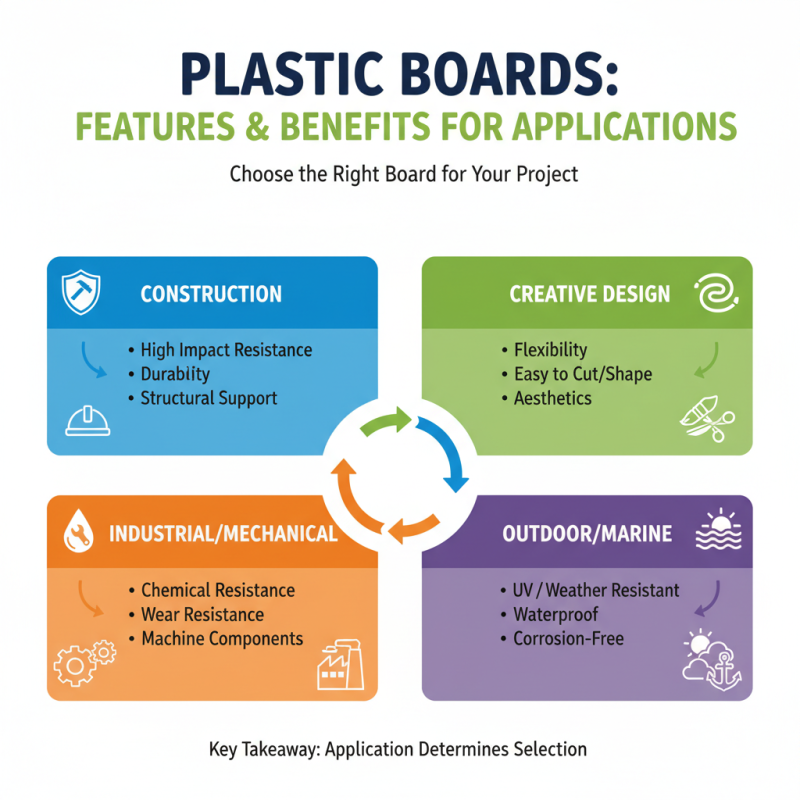
When selecting a plastic board, consider its specific application. Different projects demand different features. For example, some boards provide high impact resistance, making them ideal for construction use. Others may offer better flexibility, suited for creative design projects. Knowing how and where you plan to use the board is crucial in making an informed choice.
Thermal stability is another key factor. Some plastic boards withstand extreme temperatures without warping. This property is essential in outdoor applications. Additionally, UV resistance can prolong the lifespan of the board in sunny environments. However, it’s worth noting that not all plastic boards are equal. Some may degrade quickly under UV exposure, leading to unexpected costs later.
Finally, think about weight and ease of handling. Heavier boards may be more durable, but they can complicate transportation. Lighter options are easier to manage yet might not offer the same strength. Reflecting on these aspects can guide you to a better decision. Understanding what you need, rather than what looks good, can make a significant difference in the success of your project.