What is ABS Material and Its Uses in Various Industries?
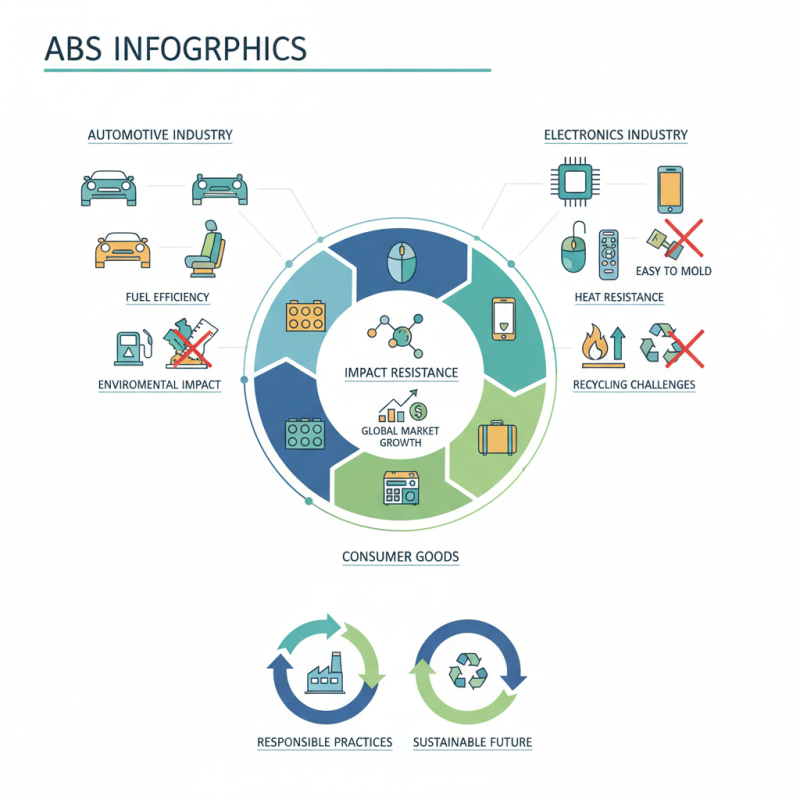
ABS material, also known as Acrylonitrile Butadiene Styrene, plays a crucial role in various industries. Its versatility stems from its strong impact resistance and durability, making it a preferred choice for many applications. According to a report by Market Research Future, the global ABS market is expected to reach $30 billion by 2026, driven by demands from electronics, automotive, and consumer goods sectors.
In the automotive industry, ABS material is utilized for dashboards, bumpers, and interior components. Its lightweight nature helps improve fuel efficiency. However, while ABS offers many benefits, companies must address its environmental impact. The material is not biodegradable, leading to concerns about plastic waste.
Similarly, in electronics, ABS material is favored for housing and enclosures. It can withstand heat and is easy to mold. Despite these advantages, manufacturers face challenges in recycling ABS products. Improving recycling processes is essential for a sustainable future. The ongoing evolution of ABS material demonstrates both its potential and the industry’s need for responsible practices.
What is ABS Material?
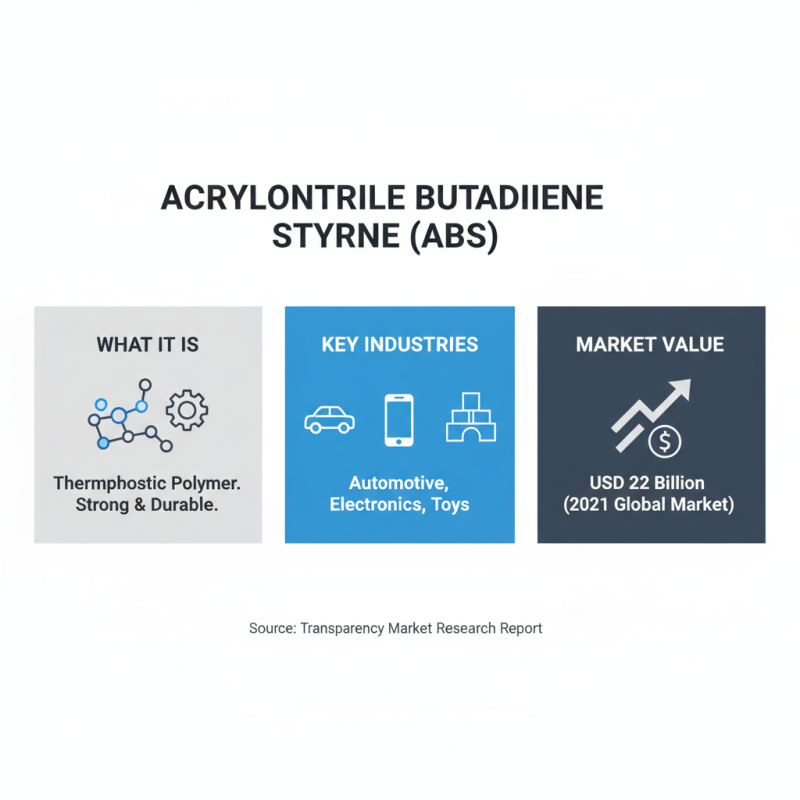
Acrylonitrile Butadiene Styrene (ABS) is a thermoplastic polymer. It is widely recognized for its strength and durability. ABS is a favored material in industries such as automotive, consumer electronics, and toys. According to a report from Transparency Market Research, the global ABS market was valued at approximately USD 22 billion in 2021, highlighting its significance.
In the automotive sector, ABS is used for interior and exterior components. These parts are lightweight yet strong, contributing to vehicle efficiency. A study by Markets and Markets projected a compound annual growth rate of 6.5% for ABS in automotive applications through 2025. The material’s resistance to impact and heat makes it suitable for critical components.
In consumer electronics, ABS plays a vital role. Its ability to be molded into intricate shapes allows for innovative designs in devices. The global electronics market is projected to grow significantly, with plastics like ABS being pivotal. However, producing ABS raises environmental concerns. The energy-intensive processes and raw material sourcing should prompt industries to rethink sustainability. Balancing performance and environmental impact remains a challenge.
Chemical Composition and Properties of ABS
ABS, or Acrylonitrile Butadiene Styrene, is a popular thermoplastic known for its strength and durability. This material is a copolymer made from three monomers: acrylonitrile, butadiene, and styrene. Each component brings unique properties. Acrylonitrile provides chemical resistance, butadiene adds toughness, and styrene gives a smooth surface finish. The chemical composition allows ABS to remain stable under various conditions.
The physical properties of ABS are impressive. It exhibits high impact resistance and can withstand high temperatures. This makes it suitable for automotive parts, consumer electronics, and toys. ABS is also lightweight, contributing to its versatility across industries. However, its production process can generate waste, prompting questions about environmental impact. Some users may find the need for proper recycling methods and sustainable practices.
In terms of aesthetic qualities, ABS can be easily colored and molded. This trait is excellent for manufacturers wanting vivid colors or specific shapes. Customization options can enhance product appeal, though achieving consistency can be challenging. Users need to ensure quality control during production to avoid imperfections in the final product. Overall, the blend of properties in ABS makes it a valuable material, despite some lingering concerns about its environmental footprint.
Common Manufacturing Processes for ABS Materials
ABS (Acrylonitrile Butadiene Styrene) is a popular thermoplastic used across various industries due to its strength and versatility. In manufacturing ABS materials, there are key processes that enhance its properties. One common method is extrusion. During extrusion, ABS is melted and formed into sheets or shapes. This process allows for rapid production but can sometimes lead to variations in thickness.
Injection molding is another vital technique for ABS. It involves injecting molten plastic into molds to create specific shapes. This method is ideal for high-volume production. According to a market research report by Grand View Research, the global ABS market was valued at approximately $23 billion in 2022 and is expected to grow. However, inconsistencies in material quality can arise, leading to potential weaknesses in the final products.
Blow molding is also a widely used process, especially for creating hollow objects. It uses air pressure to expand melted ABS into the desired form. This technique is efficient, but achieving uniform wall thickness can be challenging. Reports suggest that advancements in blow molding technologies are necessary to improve production reliability. As industries continue to evolve, the demand for high-quality ABS will push manufacturers to refine these processes continually.
Uses of ABS Material in Various Industries
Applications of ABS in the Automotive Industry
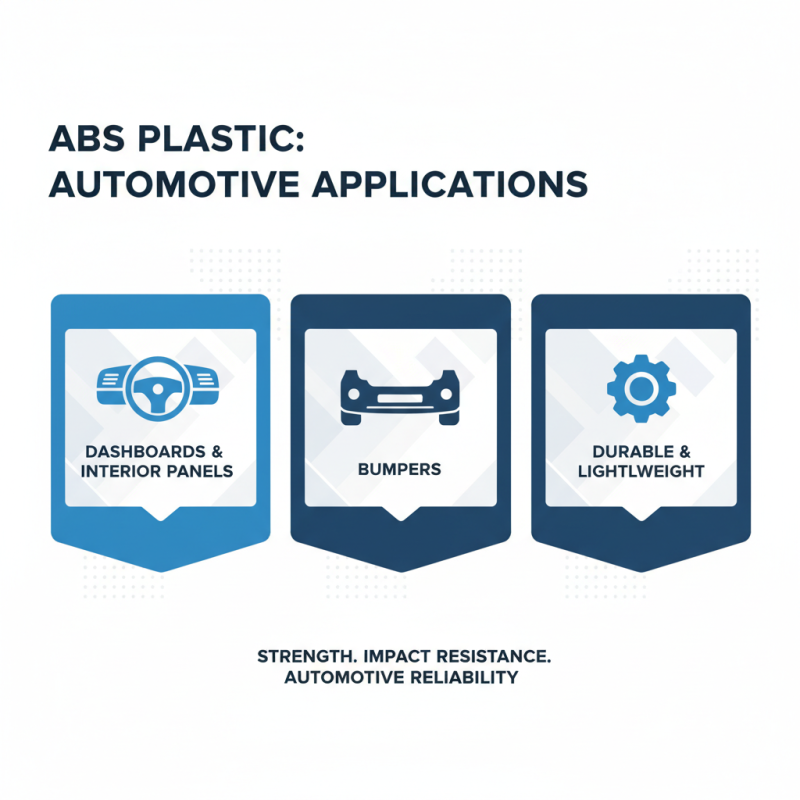
ABS, or Acrylonitrile Butadiene Styrene, is a thermoplastic known for its strength and durability. The automotive industry relies heavily on ABS due to its excellent impact resistance and lightweight properties. It is often used to manufacture dashboards, interior panels, and bumpers. These components need to endure daily wear and tear while maintaining aesthetics.
In vehicles, ABS parts contribute to safety and comfort. The material's flexibility allows for complex shapes, enabling innovative designs. For example, modern car interiors feature smooth, integrated surfaces that enhance user experience. However, the production process can be energy-intensive, raising concerns about environmental impact. Finding a balance between performance and sustainability remains a challenge.
Another application of ABS in the automotive sector involves exterior parts like grilles and trims. These components face exposure to harsh weather conditions, demanding durability. While ABS performs well, its longevity depends on environmental factors. This introduces uncertainties that manufacturers continually explore. Maintaining quality while designing for the future is essential for innovation in this vital industry.
Usage of ABS in Consumer Electronics and Household Products
ABS, or Acrylonitrile Butadiene Styrene, is a widely used thermoplastic in various industries. In consumer electronics, ABS material is appreciated for its durability and impact resistance. This makes it ideal for smartphone housings, where frequent drops can occur. According to a recent industry report, the ABS market in consumer electronics is projected to grow by 5% annually.
In household products, ABS is utilized in areas beyond electronics. It's often found in kitchen appliances, such as blender housing and microwave components. Users appreciate the lightweight and sturdy attributes of ABS, making it a favorite choice. Data indicates that around 30% of household items produced rely on ABS for their construction. However, concerns arise regarding its environmental impact. Not all ABS products are recycled effectively, leading to waste. This raises questions about sustainability practices within manufacturing.
The continuous demand for ABS in these sectors poses a challenge in balancing efficiency and eco-friendliness. Innovations in recycling methods are still in development, making it essential for industries to rethink their material choices. As consumers become more environmentally conscious, the pressure increases to improve the lifecycle of ABS products.
What is ABS Material and Its Uses in Various Industries? - Usage of ABS in Consumer Electronics and Household Products
| Application Area | Description | Benefits of Using ABS |
|---|---|---|
| Consumer Electronics | Used in casings for devices such as televisions, computers, and gaming consoles. | Durability, lightweight, and excellent impact resistance. |
| Household Products | Commonly used in items such as toys, kitchen appliances, and furniture. | Versatility, ease of molding, and a glossy finish. |
| Automotive Industry | Applied in interior trim parts, dashboard components, and exterior panels. | High strength-to-weight ratio and resistance to corrosive materials. |
| Medical Equipment | Used in non-invasive medical devices and housings for equipment. | Biocompatibility and ease of sterilization. |
| Industrial Applications | Utilized in machinery housings and transportation equipment. | Impact resistance and dimensional stability. |
Conclusion
ABS material, or Acrylonitrile Butadiene Styrene, is a versatile thermoplastic known for its strength, durability, and resistance to various chemicals. Composed of acrylonitrile, butadiene, and styrene, ABS exhibits favorable properties such as excellent impact resistance and good dimensional stability, making it an ideal choice for a range of applications.
In the automotive industry, ABS material is widely utilized for components such as dashboards and interior fittings due to its ability to withstand harsh environmental conditions. Additionally, its popularity extends to consumer electronics and household products, where it provides the necessary durability and aesthetic appeal. As environmental concerns grow, the recycling of ABS material has become a significant focus, promoting sustainability in its manufacturing and usage processes.
Related Posts
-
Top 10 Benefits of ABS Material in Manufacturing for Enhanced Durability and Cost Efficiency
-

Top 10 Benefits of ABS Plastic You Need to Know in 2023
-

2025 How to Choose Clear Plastic Sheets for Maximum Durability and Versatility
-

Top Benefits of Using Solid Polycarbonate Clear Sheets for Your Projects
-
2026 How to Choose Solid Plastic Sheets for Your Next Project?
-

2026 Best Plastic Sheet Material Options for Every Need?